Can You Clean Air Ducts Yourself in Mesa? (And When to Call a Pro)
You pulled off a vent cover in your Mesa home, looked inside, and saw a layer of dust thick enough to write your name in. Your first thought: can I just clean this myself and save a few hundred bucks?
That's a fair question — and you're not the only Mesa homeowner asking it. With AC systems running six to nine months out of the year here, dust builds up inside ductwork faster than in most parts of the country.
The honest answer is yes, you can handle some of it yourself — but there's a clear line where DIY stops working and professional air duct cleaning becomes the smarter move.
Can I Clean Air Ducts Myself?
Yes, you can handle basic duct cleaning at home. This includes removing vent covers, vacuuming visible dust from registers, wiping down the first few feet of ductwork you can reach, and replacing your HVAC filter.
However, DIY cleaning cannot reach deep trunk lines, the blower compartment, or debris packed far inside the system. If you notice dust returning within days of cleaning, musty odors from your vents, visible mold, or it's been more than two to three years since a full cleaning, it's time to call a professional.
Why Mesa Homeowners Want to DIY Duct Cleaning
Professional duct cleaning in Mesa typically runs $300 to $500 or more for an average home. That's a real cost, and it makes sense to wonder how much of the job you can handle yourself.
DIY duct cleaning works well as regular maintenance between professional visits. You can keep surface dust from piling up, swap your filter on schedule, and keep airflow steady through your registers.
Tools You Need for DIY Air Duct Cleaning
You probably have most of what you need at home already. Before you start, gather everything in one spot so you can move through the job without stopping.
- Screwdriver — for removing vent covers and registers
- Shop vac or household vacuum with a hose attachment
- Microfiber cloths — for wiping down reachable ductwork
- Stiff-bristle brush or old toothbrush — for scrubbing vent covers
- Warm soapy water — for soaking vent covers
- New HVAC filter — replace it every 30-90 days in Mesa's dusty climate
Step-by-Step: How to Clean Your Air Ducts at Home
Follow these steps for a thorough DIY duct cleaning session:
- Turn off your HVAC system completely before starting
- Remove all vent covers and registers — soak them in warm soapy water
- Vacuum inside each vent opening as far as your hose can reach
- Wipe down the inside walls of reachable ductwork with a damp microfiber cloth
- Scrub vent covers with a stiff brush, rinse, and dry completely
- Replace your HVAC filter with a fresh one
- Reinstall vent covers and turn the system back on
Does Duct Cleaning Actually Help? An Honest Answer
Duct cleaning is one of the more oversold services in this industry, and it is worth being straight about when it helps and when it does not. The evidence for routine duct cleaning as a general health or efficiency measure is weak, and it has never been established that cleaning ducts on a schedule improves air quality in an otherwise normal home. If someone is selling you annual duct cleaning for a house with no specific problem, the value is questionable.
What is well supported is cleaning ducts for a specific, identifiable reason. Visible mold growth inside the ductwork or on components. Vermin infestation, which does happen in attic runs and around idle equipment. Ducts genuinely clogged with debris to the point of restricting airflow — which in practice usually means construction debris, a collapsed run, or a system that operated for a long period with no filter at all. Those are real problems and cleaning is a real solution.
The useful question to ask is therefore not how often ducts should be cleaned, but what specifically is wrong. If the answer is a musty smell, the likely source is the evaporator coil and drain pan rather than the duct runs, and cleaning ducts will not touch it. If the answer is dust settling on furniture, the more likely cause is a filter bypassing in its slot or return-side duct leaks pulling attic air in. In both cases duct cleaning treats a symptom and leaves the cause.
What DIY Duct Cleaning Can Damage
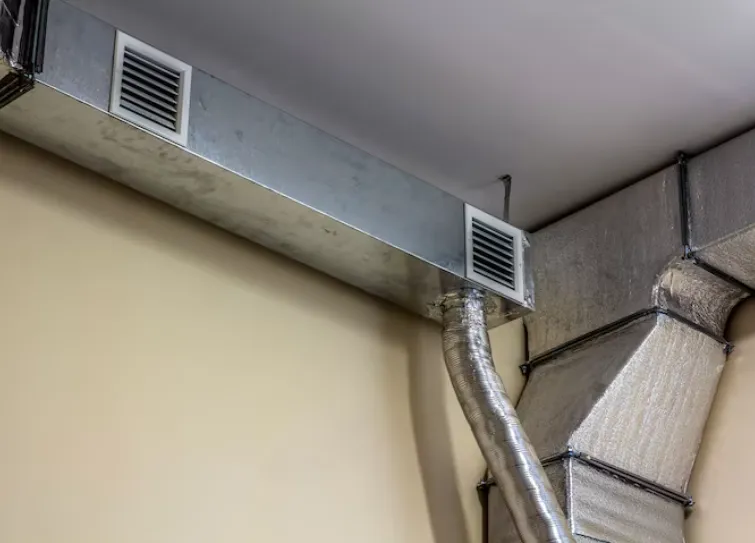
The risks of doing this yourself are mostly about what the equipment is made of, and they are not obvious until something is already torn. Most residential duct runs in Mesa-area homes are flexible duct: a thin inner liner over a wire helix, wrapped in insulation and an outer jacket. The inner liner punctures easily. A stiff brush on a rod, or a shop vac hose pushed in with any force, can tear it, and a torn liner leaks conditioned air into the attic permanently. You have converted a cleaning project into a repair.
The second risk is the evaporator coil, which sits where the return air arrives and is both delicate and expensive. Pushing debris toward it, or dislodging a season's accumulation into it, loads the coil fins with material that is much harder to remove from a coil than from a duct. Bent coil fins reduce heat transfer and are not practically repairable. Nothing about a homeowner cleaning attempt should drive debris in that direction.
The third is simply what you are doing to the air in the house. Agitating settled dust in a duct system without the containment and negative pressure a professional setup provides tends to relocate it into living space rather than remove it, which is the opposite of the goal. Households with asthma or allergies are exactly the ones most motivated to try this and most affected by getting it wrong.
- Flexible duct inner liners tear easily. A tear becomes a permanent leak into your attic.
- Never drive debris toward the evaporator coil. Coil fins are delicate and costly to clean properly.
- Working in a Mesa attic in summer is a heat-illness risk in its own right. Attics exceed 150 degrees.
- Without containment, agitated dust ends up in your living space rather than in a vacuum.
- If you find mold or evidence of vermin, stop. That is not a DIY job.
The Jobs That Beat Duct Cleaning in a Mesa Home
If your actual goal is cleaner air and better comfort, there are two jobs that reliably deliver more than duct cleaning does in homes of this era, and neither gets marketed as aggressively. The first is duct sealing. In Mesa, Tempe, and central Phoenix homes with attic duct runs, sealing leaking joints stops conditioned air escaping into the attic and — more importantly for air quality — stops return-side leaks pulling attic dust straight into the system. Sealing addresses the cause that duct cleaning only ever addresses as a symptom.
The second is getting the filtration right, which is a smaller job than it sounds. A filter that seals properly in its slot, in a thickness and rating the blower can actually handle, prevents the dust that duct cleaning later removes. A filter with a visibly clean border after weeks of service is bypassing, and that bypassed dust goes onto the coil and into the ducts. Fixing a bypassing filter is cheap and compounds over years.
Beyond those, the honest list is short and unglamorous: confirm the condensate drain and float switch are working, because a wet pan is the most common source of the musty smell people attribute to ducts; keep the condenser coil clean, rinsed from the inside out rather than hosed from the outside; and have static pressure checked if any room has never cooled properly, because that measurement distinguishes a duct problem from an equipment problem.
Our guides to picking the right filter and a clogged drain line cover two of those directly. If you would rather have the ductwork assessed than guessed at, you can get in touch or see what we cover.
When to Call a Professional
If you see visible mold growth, smell musty odors that won't go away, notice pest droppings near vents, or haven't had a professional cleaning in 3+ years, it's time to bring in a pro. Professional technicians use truck-mounted equipment that generates 10x the suction of a household vacuum, reaching every inch of your ductwork.
Call Fast Track Heating & Cooling at (602) 905-4528 for professional air duct cleaning in Mesa and the surrounding areas.
Related Services
Need HVAC Help in Arizona?
Fast Track Heating & Cooling offers free estimates on all HVAC services across the Valley.
Call (602) 905-4528