Furnace Smells Like Burning? When It's Normal and When It Isn't
You turn the heat on for the first time all year and within a minute the house smells like something is burning. It is an alarming smell, and the instinct to worry is reasonable — but in most Arizona homes, on the first run of the season, it is completely normal and harmless.
The problem is that "burning smell" covers several very different things, and a couple of them are genuinely serious. The useful skill is telling them apart, which mostly comes down to what the smell is like and how long it lasts.
Here is how to read yours.
The Normal One: Burning Dust
If the smell is dusty and slightly acrid — like a hot iron, or a radiator in an old building — and it appears the first time you run the heat after a long gap, it is almost certainly dust burning off the heat exchanger.
This is more pronounced in Arizona than almost anywhere else, for a simple reason: your heating system has been completely idle since roughly February. That is eight or nine months of fine desert dust settling onto surfaces that then get heated to several hundred degrees the moment you call for heat. The dust burns off, it smells, and then it is gone.
How to confirm it is just dust:
- It appears on the first heating cycle of the season, not out of nowhere in January.
- It fades noticeably within 15 to 30 minutes of running.
- It is gone entirely by the second or third cycle and does not come back.
- It smells dusty and dry rather than chemical, electrical, or sweet.
- No alarms are going off and nobody feels unwell.
Open a few windows for twenty minutes and let it run. If you want to reduce it next year, replacing the filter before the first cold snap and having the system cleaned helps — far less dust reaches the exchanger when the filter is fresh.
If the smell is still there after an hour of running, or it comes back on every cycle for days, it is not dust and you should keep reading.
Electrical: Hot Plastic, Ozone, or Burning Wire
A sharp, acrid smell — hot plastic, melting insulation, or the metallic tang of ozone — is an electrical problem and it needs attention now rather than later.
Possible causes include an overheating blower motor, a failing capacitor, a loose or corroded wire connection arcing under load, a seized motor bearing drawing excess current, or a cracked wire sheath contacting metal. On electric furnaces and heat pump air handlers, a failing heat strip or its relay produces the same smell.
What makes electrical smells urgent is that they are the precursor to a fire rather than a nuisance. Shut the system off at the furnace service switch — the light-switch-looking one on or near the cabinet — and leave it off until someone has looked at it. If you can see scorch marks, melted insulation, or discoloured wiring, do not turn it back on to "test" it.
Gas: Rotten Eggs or Sulfur
Natural gas has no natural odour. Utilities add a compound called mercaptan specifically so that leaks smell unmistakably of rotten eggs or sulfur.
If you smell that, treat it as a gas leak without exception and without trying to confirm it first.
Do not flip any switch, including a light switch. Do not use your phone indoors. Do not try to find the source, relight anything, or open the furnace. Get everyone out of the house, and once you are outside, call your gas utility's emergency line or 911.
This applies even if the smell is faint and even if it goes away. An intermittent gas smell is still a gas leak.
Smoke, Soot, or Something Actually Burning
A smoky smell, or visible smoke from a register, means combustion is happening somewhere it should not be or something flammable has made contact with hot metal.
The most common benign version is debris — paper, insulation, a plastic bag, or rodent nesting material — that has found its way into the ductwork or against the heat exchanger over a long idle summer. We pull surprising things out of furnace cabinets every November.
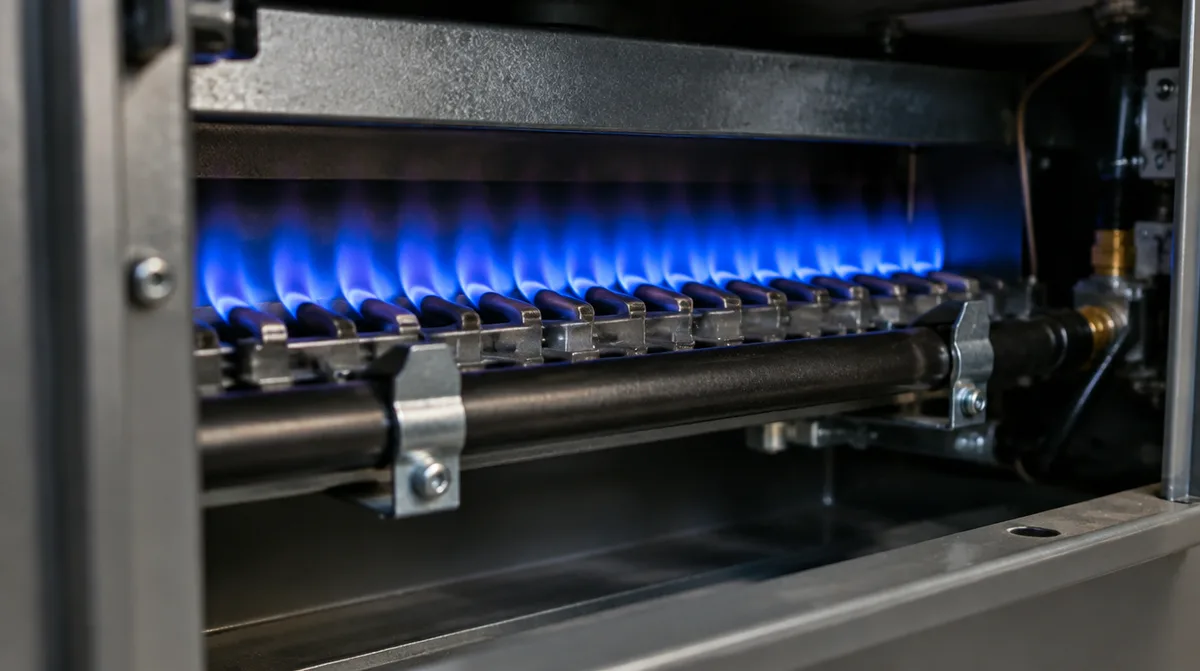
The less benign version is a combustion problem: burners out of adjustment, a partially blocked flue causing exhaust to spill back into the house, or a cracked heat exchanger. All three put combustion byproducts somewhere they do not belong.
Shut the system down and have it inspected. If you see actual smoke rather than just smelling it, treat it as a fire and call 911.
The Musty Smell That Isn't Burning at All
Worth mentioning because people often lump it in: a damp, musty, or mildewy smell when the system runs is a moisture problem, not a heat problem. It usually comes from the evaporator coil or the condensate drain pan, both of which sit in the same cabinet as your furnace.
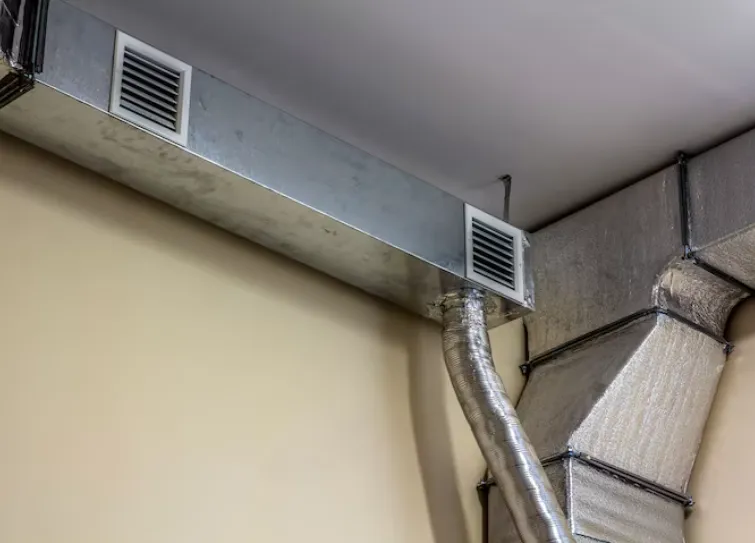
In Arizona this shows up most in early autumn, when you may still be cooling. Our guide on why an AC smells bad covers it properly, and air duct cleaning is sometimes the answer if the smell is coming from the ducts themselves rather than the equipment.
Carbon Monoxide: What It Does and Doesn't Smell Like
This is the most important paragraph in this article. Carbon monoxide has no smell at all. None. You cannot detect it by nose, and no description of a smell will ever tell you whether CO is present.
What that means practically is that you cannot use the absence of a smell as reassurance, and you cannot use the presence of one as a CO test. The only thing that detects carbon monoxide is a carbon monoxide alarm.
If you have a gas furnace, you should have working CO alarms on every level of the house and near sleeping areas. They are inexpensive, they expire after five to seven years regardless of battery condition, and replacing an expired one is one of the highest-value things you can do before heating season.
Symptoms of CO exposure are easy to mistake for a winter bug: headache, dizziness, nausea, fatigue, confusion. The telling detail is that they improve when you leave the house and return when you come back, and that more than one person — including pets — is affected. If that pattern fits, get out and call 911.
Quick Reference
What the smell most likely means:
- Dusty, first run of the season, fades in 30 minutes — normal dust burn-off. Ventilate and carry on.
- Hot plastic, burning wire, ozone — electrical. Shut it off at the service switch and call a technician.
- Rotten eggs or sulfur — gas leak. Leave the house, then call the utility or 911 from outside.
- Smoke, or soot around vents — combustion or debris problem. Shut it off and have it inspected.
- Musty or mildewy — moisture in the coil, pan, or ducts. Not a heating fault.
- No smell, but headaches when the heat runs — possible carbon monoxide. Leave and call 911.
Frequently Asked Questions
How long should the dust smell last? Fifteen to thirty minutes on the first cycle, and it should be gone by the second or third. Days of it is not dust.
Why is it so much stronger in Arizona? Because the system sits unused for eight or nine months and the dust here is fine and abundant. In a climate where heat runs ten months a year, the exchanger never accumulates that much.
Can a dirty filter cause a burning smell? Indirectly, yes. A restricted filter makes the heat exchanger run hotter, which intensifies dust burn-off and can push components past their normal operating temperature.
Should I run the heat before winter just to get this over with? Genuinely yes. Running the system for twenty minutes on a mild October day burns the dust off at a convenient moment and tells you whether anything is broken while you still have time to book a repair.
My furnace smelled like burning once and never again. Should I worry? If it was the first run of the season and never returned, almost certainly not.
Not Sure What You're Smelling?
If the smell is anything other than a brief dust burn-off, or if it has not gone away after an hour of running, it is worth having someone look before you run the system through a whole winter.
Fast Track Heating & Cooling inspects and repairs heating systems across Mesa, Chandler, Gilbert, Tempe, Scottsdale, and the East Valley. See our furnace repair service, furnace cleaning, or furnace repair in Mesa. Book online or call (602) 905-4528. If you smell gas, call your utility or 911 from outside before you call us.
Related Services
Need HVAC Help in Arizona?
Fast Track Heating & Cooling offers free estimates on all HVAC services across the Valley.
Call (602) 905-4528