What Size AC Unit Do I Need? A Sizing Guide for Arizona Homes
If you're buying a new air conditioner, getting the size right is one of the most important decisions you'll make — and it matters even more in Arizona than almost anywhere else in the country. An AC that's too small will run constantly and never quite keep up with the heat. One that's too big will cool unevenly, cycle on and off too often, and struggle to remove humidity. Either way, you'll pay more and get less.
Here's how AC sizing actually works, why the usual rules of thumb fall short in the desert, and how to make sure you get it right.
How AC size is measured
Air conditioner size isn't about physical dimensions — it's about cooling capacity, measured in tons or BTUs (British Thermal Units). One ton equals 12,000 BTUs of cooling per hour. Residential systems typically range from about 1.5 tons to 5 tons.
The bigger the number, the more cooling power. But bigger is not automatically better — and that's the mistake that trips up a lot of homeowners.
Why "bigger" isn't better
It's tempting to think that in Arizona's extreme heat, you should just get the biggest unit you can. But an oversized AC actually performs worse:
- Short cycling. An oversized unit cools the air quickly, then shuts off — over and over. This constant on-off cycling wears out the system faster and uses more energy.
- Poor humidity control. Air conditioners remove humidity as they run. A unit that cools too fast doesn't run long enough to pull moisture out of the air, which can leave your home feeling clammy — a real issue during monsoon season.
- Uneven cooling. Short cycles mean some rooms get cold while others never quite catch up.
- Higher costs. You pay more upfront for the bigger unit and more every month to run it inefficiently.
An undersized unit has the opposite problem: it runs nonstop trying to keep up, never reaches your target temperature on the hottest days, and wears out early from the strain. The goal is a system sized just right for your home.
The rule of thumb — and why it doesn't work in Arizona
You'll find plenty of online calculators that use a simple formula: roughly 20 BTUs per square foot of living space. By that math, a 2,000-square-foot home would need about 40,000 BTUs, or a 3.5-ton unit.
Here's the problem: that formula is built for average U.S. climates, and Arizona is anything but average. Our heat load is dramatically higher than most of the country. A square-foot rule that works in Ohio will consistently undersize a unit for Phoenix, leaving you with a system that can't keep up when it's 115° outside.
That's why generic online calculators so often get it wrong for Valley homes. Proper AC sizing in Arizona has to account for a lot more than square footage.
What actually determines the right size for your home
A correct sizing calculation — professionals use what's called a Manual J load calculation — factors in things a square-foot estimate ignores:
- Arizona's extreme heat load and your local microclimate
- Insulation quality — how well your home holds cooled air
- Windows — how many, which direction they face, and how much sun they let in
- Ceiling height and home layout
- Sun exposure and shading around your home
- Ductwork condition and how efficiently air moves through your home
- Number of occupants and heat-generating appliances
Two homes with identical square footage can need very different systems depending on these factors. That's why a real load calculation — not a quick online estimate — is the only reliable way to size an AC in Arizona.
What a Manual J Load Calculation Actually Measures
A proper sizing calculation, usually referred to as a Manual J, replaces the square-footage rule of thumb with an accounting of where heat actually enters your specific house. It considers the direction each wall and window faces, the type and area of glazing, how much shading falls on each exposure, the insulation levels in walls and attic, the air tightness of the building, the number of occupants, the heat produced by appliances, and the local design temperature. The result is a cooling load for your house as built and oriented, rather than for an average house of the same size.
In Arizona the factors that move that number most are solar ones. A house with large west-facing windows and no overhang takes enormous afternoon heat gain, and two homes of identical floor area on the same street can need meaningfully different capacity purely because of which way they face. Attic insulation is the other big one: homes from the 1970s and 1980s often have insulation that has compacted or degraded, which raises the load substantially compared with what the house was originally designed for.
A contractor who sizes by square footage alone, or simply matches the tonnage of the old unit, is skipping the step that determines whether the new system will work. Asking to see the load calculation is reasonable, and a contractor who performed one will not mind showing it.
- Orientation and glazing: west-facing glass is the single largest variable in most Valley homes.
- Attic insulation: degraded insulation raises the load more than most homeowners expect.
- Shading: mature trees, overhangs, and neighboring buildings all reduce real load.
- Additions and conversions: a converted garage changes the load the original system was sized for.
Why Ductwork Has to Match the New Size
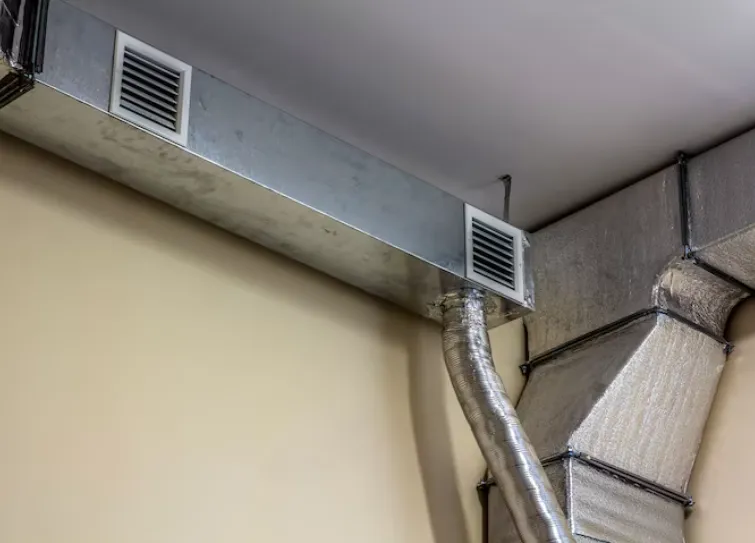
Sizing equipment correctly is only half the problem, because the ductwork has to be able to move the airflow that equipment needs. A system is designed to move a particular volume of air per ton of capacity, and if the existing ducts were sized for a smaller unit — or were undersized from the start, which is common in older homes — a correctly sized new system will run high static pressure, move less air than it should, and fail to reach its rated capacity or efficiency.
This is one of the most common reasons a new installation disappoints. The equipment is right, the load calculation was done, and the house still does not cool as expected because the ducts are a bottleneck. It is also why upsizing equipment to fix a house that does not keep up so often fails: a bigger unit on the same undersized ducts gets choked even harder. The companion calculation to Manual J is duct design, and a thorough replacement quote will have checked static pressure on the existing system before recommending anything.
See our new AC installation guide for the questions worth asking any installer, or read about AC installation in Chandler and Gilbert.
Get it right the first time
A new air conditioner is a significant investment, and it's one you'll live with for the next 12 to 15 years (about the typical lifespan of a system in Arizona's demanding climate). Sizing it correctly means lower energy bills, better comfort, more even cooling, and a system that lasts. Sizing it wrong means paying to fix a mistake for a decade.
The safest path is to have a professional perform an on-site load calculation rather than relying on an online estimate. At Fast Track Heating & Cooling, we assess your specific home — its insulation, windows, layout, and Arizona sun exposure — to recommend the right-sized system for real desert conditions. Our service area covers Mesa, Gilbert, Chandler, Scottsdale, Tempe, and the rest of the East Valley.
Ready to talk about a new system? Learn about our AC installation services or call us at (602) 905-4528 for a free in-home consultation.
Related Services
Need HVAC Help in Arizona?
Fast Track Heating & Cooling offers free estimates on all HVAC services across the Valley.
Call (602) 905-4528