Why Is My AC Leaking Water? Causes & Fixes for Arizona Homes
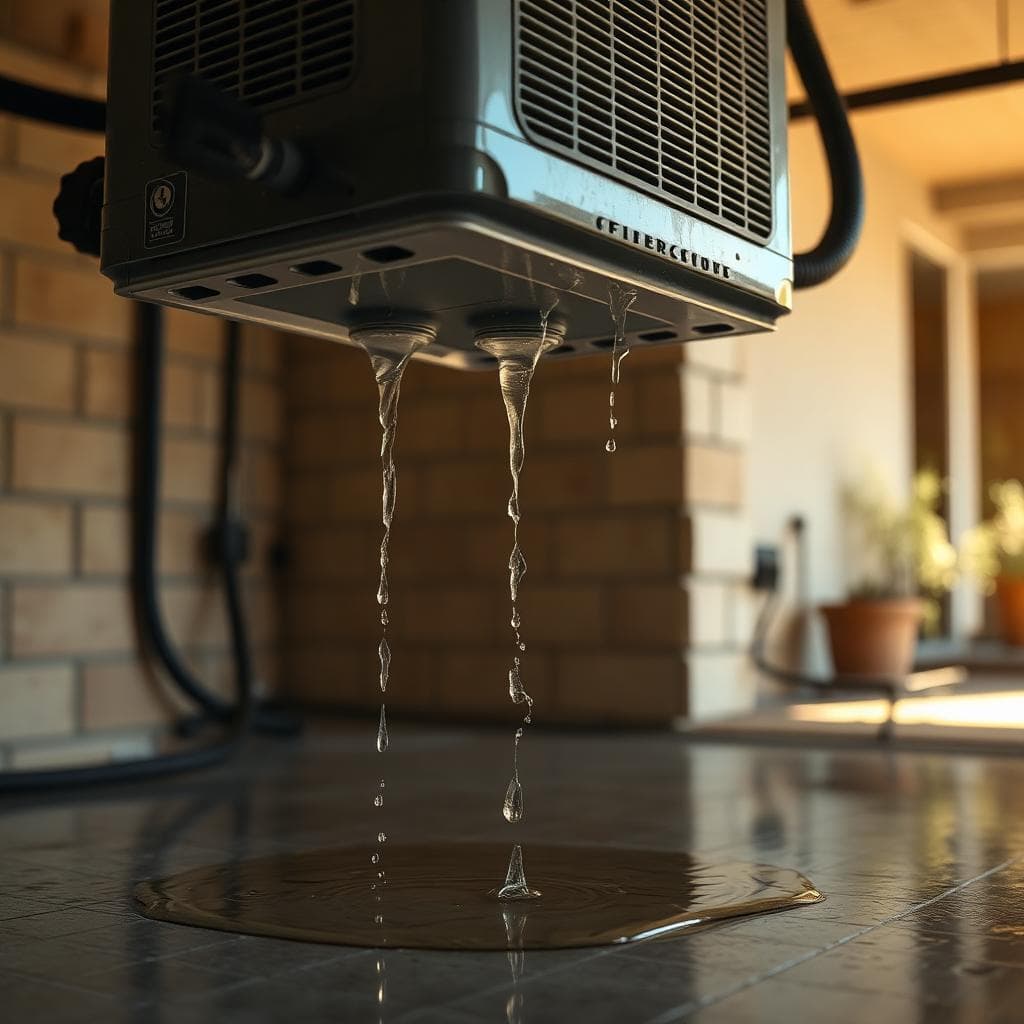
Finding a puddle under your air conditioner is never a good feeling — especially in the middle of an Arizona summer when you need that system running at full strength. The good news is that a leaking AC is one of the most common problems we see, and it's usually caused by something straightforward. The bad news is that ignoring it can lead to water damage, mold, and a much bigger repair bill down the road.
Here's what's actually happening when your AC leaks water, what you can check yourself, and when it's time to call in a professional.
First, a quick explanation of why your AC has water at all
Your air conditioner doesn't just cool the air — it pulls moisture out of it. As warm, humid air passes over the cold evaporator coil inside your system, water condenses on the coil (the same way a cold glass of iced tea "sweats" on a hot day). That condensation is supposed to drip into a drain pan and flow out of your home through a condensate drain line.
When that process gets interrupted, the water has to go somewhere — and that's when you see a leak. So almost every AC leak comes down to one question: why can't the water get out the way it's supposed to?
1. A clogged condensate drain line
This is the number one cause, and it's especially common in Arizona. Our dry, dusty climate means more debris, dust, and algae buildup inside the drain line over time. When that line clogs, water backs up into the drain pan and overflows into your home.
Signs it's a clogged drain line: water pooling near the indoor unit, a full drain pan, or your AC shutting off on its own (many newer systems have a safety switch that cuts power when the pan fills up).
2. A cracked or rusted drain pan
The drain pan sits under the evaporator coil to catch condensation. On older systems — and if your unit is 12 to 15 years old, which is about the typical lifespan in Arizona's harsh climate — the pan can rust through or crack, letting water drip straight down instead of draining away.
3. A dirty or frozen evaporator coil
If your air filter is clogged or refrigerant is low, the evaporator coil can get too cold and freeze over. When that ice melts, it can overwhelm the drain pan and cause a leak. If you also notice weak airflow or ice on the unit, this is a likely culprit.
4. Low refrigerant
Low refrigerant lowers the pressure in your system, which can cause the evaporator coil to freeze and then leak as it thaws. Low refrigerant usually points to a leak in the system itself, which is something that needs a professional to diagnose and repair.
5. A disconnected or improperly installed drain line
Sometimes the drain line simply comes loose, or was never installed with the right slope to let water flow out. This is more common after a recent installation or if the system was serviced improperly.
What you can safely check yourself
Before you call anyone, there are a few safe things to check:
- Turn off your AC. Running it while it's leaking can cause more water damage. Switch it off at the thermostat.
- Check your air filter. A dirty filter is the cause of a surprising number of AC problems. If it's clogged, replace it.
- Look at the drain pan. If it's overflowing, you may have a clog further down the line.
- Check for a shut-off switch. Some systems have a reset button near the unit if a safety float switch has tripped.
When to call a professional
A wet/dry shop vacuum can sometimes clear a minor clog at the end of the drain line outside your home. But if the clog is deeper in the system, or you're not comfortable working around your equipment, it's best to leave it to a pro. Call an HVAC technician if:
- The leak continues after you've replaced the filter and cleared the visible drain line
- You see ice on the unit or suspect low refrigerant
- The drain pan is cracked or rusted
- Your system keeps shutting off
- There's water damage, or you smell something musty (a sign of mold)
How Much Water Is Normal?
An air conditioner removes moisture from indoor air as part of cooling, so producing water is normal. What is not normal is water appearing anywhere other than where the drain line discharges. In the dry months an Arizona system produces relatively little condensate, and during monsoon season it produces a great deal more, so seeing a larger volume at the drain outlet in August than in May is expected rather than a sign of trouble.
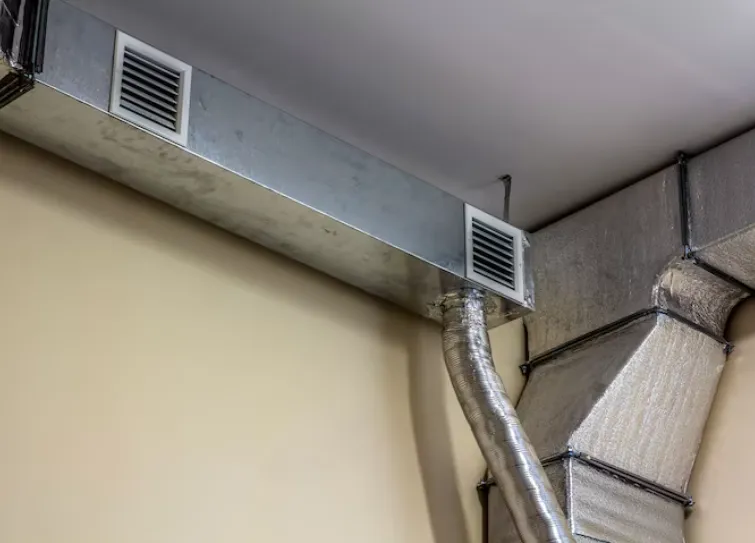
Water outside the drain outlet is the warning. A wet drain pan with standing water, staining on the ceiling below an attic air handler, damp insulation around the indoor unit, or water pooling near the furnace cabinet all indicate that condensate is not leaving the way it should. Condensation forming on the outside of refrigerant lines or ductwork in the attic is a related issue — it usually means missing or damaged insulation, and in a humid month it can drip enough to stain a ceiling even when the drain is working perfectly.
If you are not sure whether what you are seeing is normal, the simplest check is to find the drain outlet, usually a small pipe near the outdoor unit or the foundation, and confirm it is dripping while the system runs. Steady dripping there with no water elsewhere is a healthy system. No dripping at the outlet while the system is cooling, especially in a humid month, suggests the water is going somewhere else. Our drain line guide covers what to check next, and you can reach us here if water is already reaching a ceiling.
Don't let a small leak become a big problem
A leaking AC rarely fixes itself, and water damage adds up fast. Catching it early — and getting the underlying cause repaired — protects your home and keeps your system running efficiently through the hottest months.
If your AC is leaking and you're in Mesa, Gilbert, Chandler, Tempe, Scottsdale, or anywhere in the East Valley, Fast Track Heating & Cooling can get a technician out fast to find the cause and fix it right. We offer same-day service and our team is licensed, bonded, and insured. Schedule AC repair service or call us at (602) 905-4528.
Related Services
Need HVAC Help in Arizona?
Fast Track Heating & Cooling offers free estimates on all HVAC services across the Valley.
Call (602) 905-4528