Why Is My AC Blowing Hot Air? An Arizona Homeowner's Fix Guide
It's 112° outside, you walk up to a vent, and the air coming out is warm. In Arizona, that's not just uncomfortable — it can turn dangerous fast. The good news: an AC blowing hot air usually points to one of a small handful of issues, and several of them are quick fixes.
Here's what's actually happening, what you can check yourself in the next five minutes, and when it's time to stop troubleshooting and call for help.
First, check the thermostat
It sounds obvious, but this is the #1 reason we get called out for "hot air." A bumped thermostat, a dead battery, or the wrong setting is behind more service calls than any refrigerant leak or bad compressor.
- Set to COOL, not HEAT or FAN. Fan mode blows air without cooling it.
- Set temperature below room temp — try 5 degrees lower to force it to kick on.
- Check the batteries. A weak thermostat can display fine but stop signaling the outdoor unit.
- Confirm the schedule. Smart thermostats sometimes hold an old "away" or "eco" schedule that keeps the AC idle.
Check the air filter
A clogged filter is the second most common cause. When the filter is caked with dust, airflow across the evaporator coil drops. The coil gets too cold, ice forms, and warm air blows out of your vents while the system struggles.
Pull your filter. If you can't see light through it, replace it. In Arizona's dusty climate, most homes need a fresh filter every 30–60 days — more often during monsoon season. See our full breakdown on how often to change your AC filter in Arizona.
Look at the outdoor unit
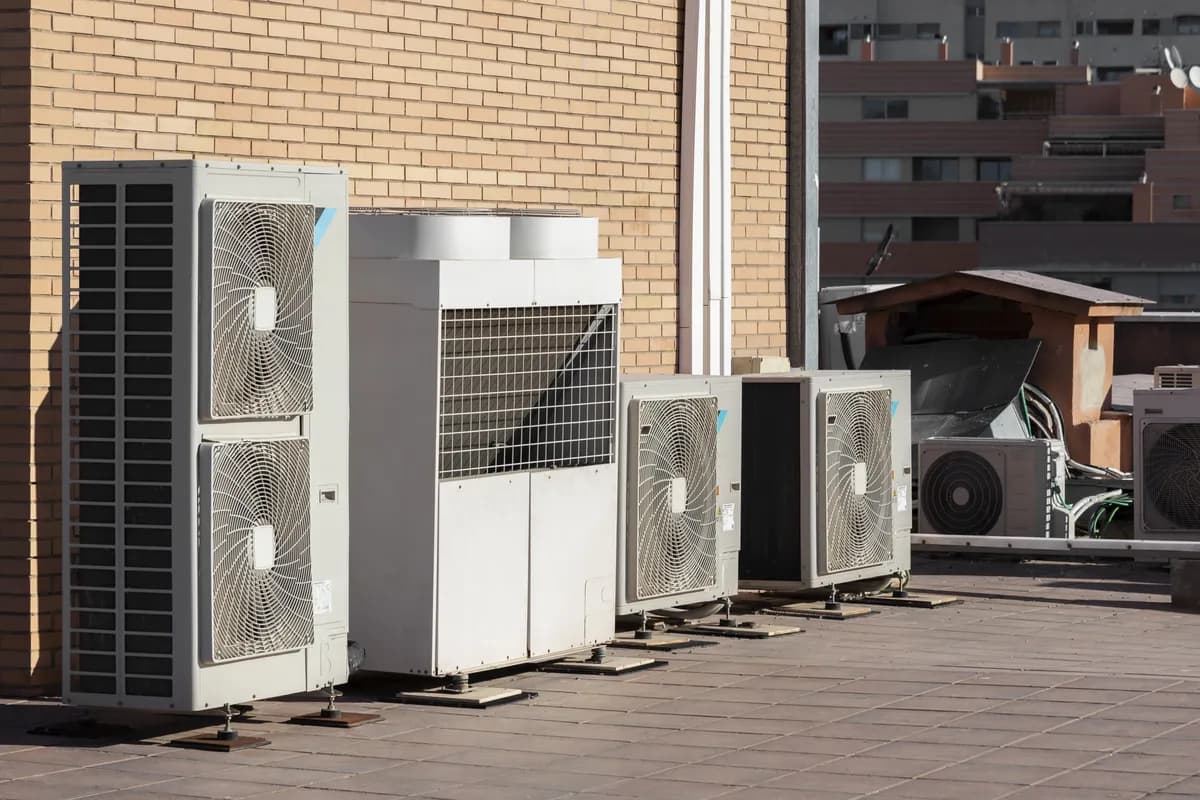
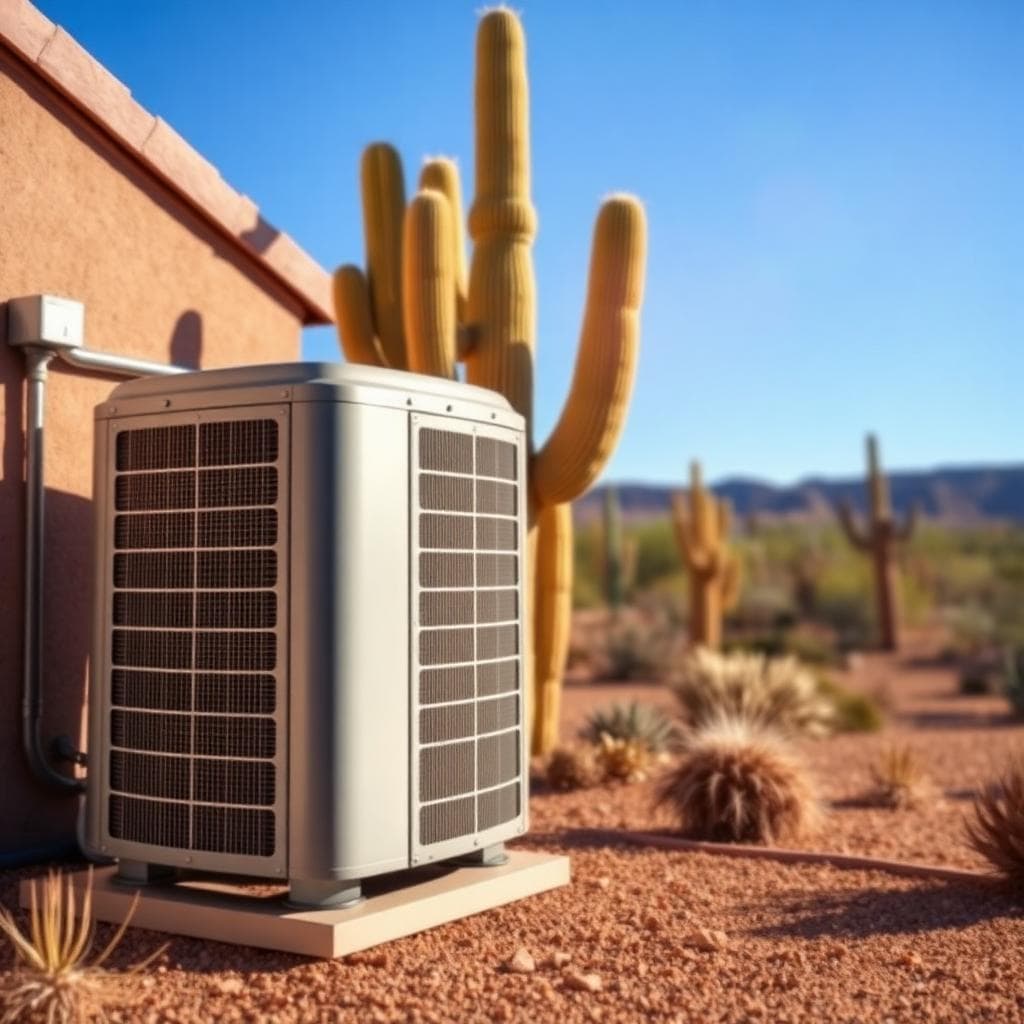
Walk outside to your condenser (the big box behind or beside the house). You're looking for three things:
- Is the fan spinning? If the outdoor fan isn't running while the system is calling for cool, the capacitor or fan motor is likely the problem.
- Is the coil packed with dust, cottonwood fluff, or debris? The condenser has to dump heat outside. If airflow is blocked, it can't — and your indoor air stays warm.
- Any humming with no motion? That's usually a failed capacitor — a common, inexpensive fix. More on that in our AC capacitor replacement cost guide.
Check the breaker
Central AC systems have two breakers — one for the indoor air handler and one for the outdoor condenser. If the outdoor one tripped, the indoor fan keeps blowing (uncooled) air. Head to your electrical panel and look for a tripped breaker in the OFF or middle position. Reset it once. If it trips again, stop — that means something in the system is drawing too much current, and it needs a technician.
Signs it's low refrigerant
If the thermostat is set correctly, the filter is clean, the outdoor unit is running, and it's still blowing warm — the most common culprit is low refrigerant, usually from a leak. Warning signs include:
- Hissing or bubbling sounds near the indoor coil or copper lines
- Ice buildup on the refrigerant lines (the copper tubing going into the wall)
- AC running constantly but never reaching set temperature
- Higher than normal electric bill without any usage change
Refrigerant isn't a consumable that gets "topped off" — it's a sealed system. If it's low, there's a leak, and it needs a pro. We cover the warning signs in more detail in our post on signs your AC needs a refrigerant recharge.
Heat Pumps: When Hot Air Is the System Doing Its Job
If your home has a heat pump rather than a furnace, there is one cause of warm air that is not a fault at all. A heat pump heats by running its refrigeration cycle in reverse, controlled by a reversing valve. If the thermostat is set to heat, or set to auto with a setpoint above room temperature, the system will deliver warm air exactly as designed. On a cool spring morning followed by a hot afternoon, an auto setting can switch modes in a way that surprises people.
The fault version is a reversing valve or its solenoid that has stuck in the heating position, which produces warm air no matter what the thermostat says. That is a real repair, and it presents almost identically to a refrigerant problem from inside the house. The distinguishing check is simple: confirm the thermostat is set to cool, with a setpoint below room temperature, and that the outdoor unit is running. If it is, and the air from the vents is warm rather than merely not cold enough, the valve is a strong suspect.
Heat pumps also run a defrost cycle in winter, during which they briefly deliver cooler air and the outdoor unit may steam. That is normal in cold weather and irrelevant in summer, but it is worth knowing so the reverse situation does not cause alarm in January.
Warm Air From Some Vents and Cold Air From Others
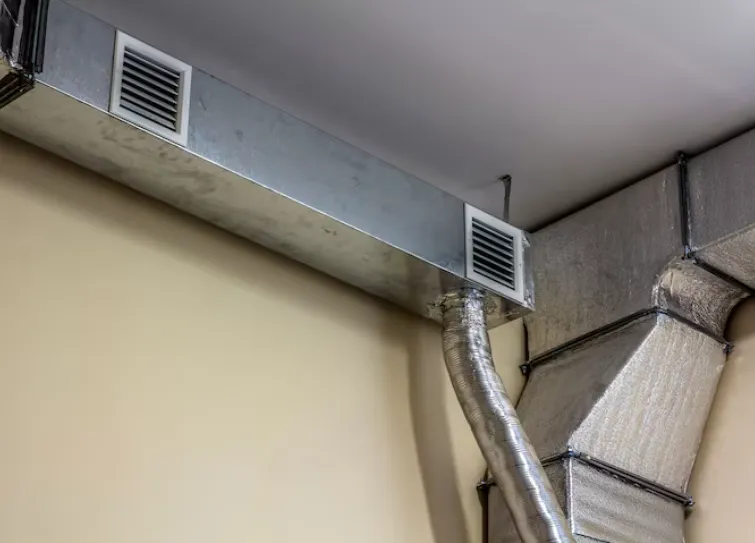
If the air is cold at some registers and warm at others, the equipment is almost certainly working and the problem is in the ductwork. Air that leaves the air handler cold and arrives warm has traveled through something hot on the way, which in Arizona means an attic that exceeds 150 degrees in summer. A run that has separated at a joint, been crushed, or lost its insulation delivers air that has absorbed attic heat before it reaches the room.
The pattern is the giveaway. Rooms nearest the air handler, on short runs, get cold air. Rooms at the end of long runs, or served by a damaged section, get air that is barely cool. This is extremely common in Mesa, Tempe, and central Phoenix homes where ductwork is decades old, and it is routinely misdiagnosed as a refrigerant problem because from the hallway the system appears to be underperforming.
Two checks help before calling. Feel the air at a register near the air handler and at one in the problem room; a large difference points at the duct. And if you can safely see the duct runs in the attic in cooler weather, look for flexible duct that is kinked, sagging, or visibly separated at a connection. Do not go into an Arizona attic on a summer afternoon to look — that is a heat-illness risk in its own right. Our guide to AC repair in Mesa covers what a duct diagnosis involves.
When to call for help
If you've checked the thermostat, filter, breaker, and outdoor unit and the air is still warm, don't keep running the system. Running a struggling AC through Arizona heat can turn a $250 capacitor job into a $2,500 compressor replacement. Shut it off and call.
At Fast Track Heating & Cooling, we handle no-cool emergencies across Mesa and the East Valley — often same-day. Learn more about our AC repair service, our Mesa AC repair page, or full HVAC service in Mesa. You can also schedule a visit online or call us at (602) 905-4528 for a free diagnostic quote.
Related Services
Need HVAC Help in Arizona?
Fast Track Heating & Cooling offers free estimates on all HVAC services across the Valley.
Call (602) 905-4528