Furnace Not Turning On? A Mesa Homeowner's Troubleshooting Guide
It happens the same way almost every year. The first genuinely cold night arrives in the East Valley, somewhere in the low 40s, and you push the thermostat up for the first time since February. Nothing happens. No rumble, no warm air — maybe a click and then silence.
Here is the thing worth knowing before you panic: in Arizona your heating system has been sitting completely untouched for roughly eight months. Nothing else in your house gets ignored that long and is then expected to work on the first try. A large share of the no-heat calls we run in Mesa in November are not broken furnaces at all. They are systems that need something cleaned, reset, or switched back on.
This guide walks the same sequence a technician walks, starting with the things you can safely check yourself. Work through it in order — the cheap causes really are the most common ones, and skipping ahead is how people end up paying for a service call that a filter would have solved.
First, Figure Out What Kind of System You Actually Have
This matters more in Arizona than almost anywhere else, and it changes the entire troubleshooting path.
Many Phoenix-metro homes do not have a gas furnace at all. They have a heat pump — the same outdoor unit that cools your house in July simply runs in reverse to heat it in December. Others have an electric air handler with resistance heat strips. Gas furnaces are common in older Mesa and Tempe neighborhoods with existing gas service, but they are not the default here the way they are in Chicago.
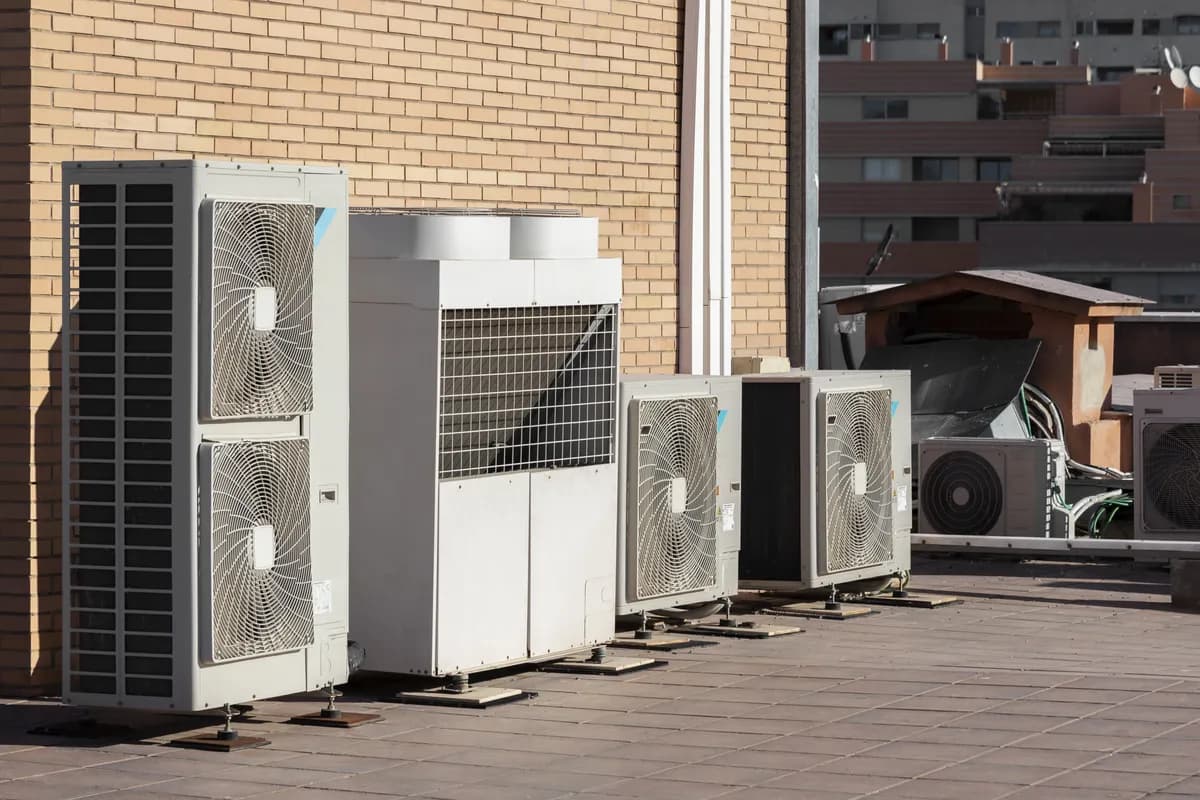
A quick way to tell: go outside and look at your condenser — the big box that runs in summer. If it is running on a cold morning while your vents are blowing warm air, you have a heat pump. If it sits dead silent while the house heats, you have a furnace or electric heat.
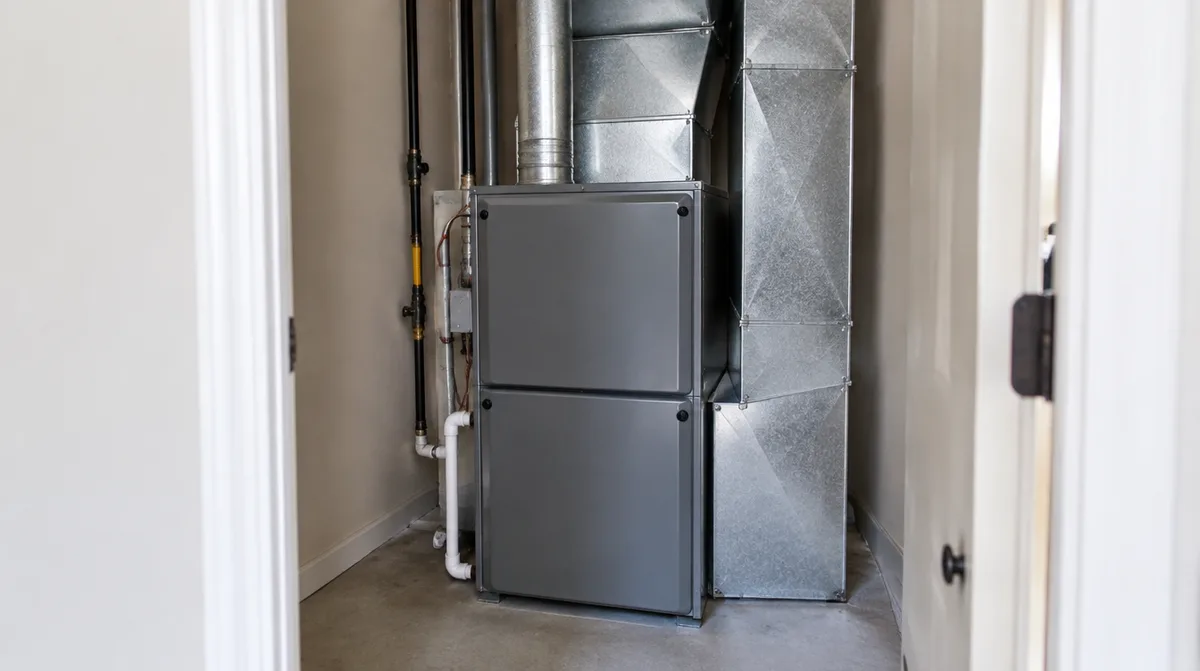
- Gas furnace — look for a flue pipe venting out the roof or wall, a gas line running to the cabinet, and a burner compartment behind a removable panel.
- Heat pump — the outdoor unit runs in winter, and your thermostat likely has an "Emergency Heat" or "Aux Heat" setting.
- Electric furnace or air handler — no gas line, no flue, and heating costs that spike hard in December.
If you have a heat pump and it is running but the air feels cool rather than hot, that is a different problem with a different explanation — see our guide on why a heat pump blows cool air in an Arizona winter. The rest of this article covers systems that will not start at all.
Check the Thermostat Before Anything Else
We have driven to more than one Mesa house where the entire repair was moving a switch. There is no shame in it — a thermostat that has sat on COOL since spring does not announce that it needs changing.
Run through all of these, not just the first one:
- Mode is set to HEAT, not COOL, OFF, or AUTO. AUTO is the one that fools people — on some thermostats it will happily sit there doing nothing in mild weather.
- The setpoint is at least five degrees above the current room temperature. A thermostat set to 68 in a 69-degree house has no reason to call for heat.
- The fan is set to AUTO rather than ON. With fan ON you get constant airflow that feels cold, which reads as "blowing cold air" even when the heat is fine.
- The display is actually lit. A blank screen usually means dead batteries — and many thermostats give no low-battery warning before they quit.
- Any schedule or "hold" is doing what you think. A program left over from summer can override whatever you just set.
Change the batteries even if the screen looks normal. Weak batteries cause intermittent behavior — the thermostat displays fine but cannot pull in the relay that actually starts the furnace. It is a five-minute test that eliminates a surprisingly common cause.
Check Power: Three Switches People Miss
A furnace needs electricity even when it burns gas — for the control board, the igniter, and the blower. There are three separate places that power gets interrupted, and homeowners routinely find only the first one.
The breaker. Find the furnace or air handler breaker in your panel. A tripped breaker is not always obviously tripped; it can sit in a middle position that looks almost normal. Push it firmly all the way OFF, then back ON. If it trips again immediately, stop. Something is drawing a fault current and you need a technician, not another reset.
The furnace service switch. This looks exactly like an ordinary light switch, usually mounted on or beside the furnace cabinet — in a closet, a hallway utility space, the garage, or up in the attic. It gets switched off by painters, by someone looking for a light, or by a previous tech who never turned it back on. If your furnace is in the attic, there is often a second switch at the top of the access ladder.
The blower door safety switch. Your furnace will not run with the blower compartment panel off or loose. The panel presses a small plunger switch; if it is not fully seated, the furnace is electrically dead by design. If anyone has had that panel off recently, push it firmly back into place.
Check the Filter — Especially in the Desert
A clogged filter does not just reduce airflow. On a furnace it actively shuts the system down.
When air cannot move across the heat exchanger fast enough, the cabinet overheats and a high-limit switch cuts the burners to prevent a fire. The furnace may light, run for a few minutes, then quit — and repeat that cycle until it locks out entirely. From the living room this looks identical to a furnace that will not turn on.
Dust loads here are genuinely higher than the national average. Fine desert dust, construction in newer East Valley developments, and monsoon debris all end up in your return. A filter that would last three months in a humid climate can be visibly grey in six weeks in Mesa. If you cannot remember changing yours, that is your answer — see how often to change your filter in Arizona for a realistic schedule.
Pull the filter out and hold it up to a light. If you cannot see light through it, replace it and give the system twenty minutes to reset before trying again.
If You Have Gas: Confirm Gas Is Actually Reaching the Furnace
Check another gas appliance first. If your gas range lights normally, you have gas at the house and the problem is at the furnace. If nothing gas-powered works, the issue is the meter or the utility, not your heating system.
Then check the shutoff valve on the gas line at the furnace. The handle should run parallel with the pipe when it is open. Perpendicular means closed. Some homes also have a separate valve that was closed over the summer and forgotten.
If your furnace is old enough to have a standing pilot light, look through the small inspection window. If the pilot is out, there will be lighting instructions printed on a label inside the burner compartment door. Follow those instructions exactly, and if the pilot will not stay lit after two attempts, stop and call someone. A pilot that keeps going out usually means a failing thermocouple or a draft problem, and repeated attempts just put unburned gas in the cabinet.
Furnace Won't Ignite: What's Happening Inside
If you can hear your furnace trying — a hum, a click, a few seconds of activity and then nothing — the ignition sequence is starting and failing partway through. Most furnaces built in the last thirty years have no pilot light at all. They use a hot surface igniter, a small ceramic element that glows orange and lights the gas directly.
A normal startup sequence runs roughly like this, and knowing it helps you describe the problem accurately:
- The thermostat calls for heat and the control board wakes up.
- The draft inducer motor spins up to clear the heat exchanger — you will hear a small fan before anything else happens.
- A pressure switch confirms the inducer is actually moving air. No confirmation, no gas.
- The igniter glows for roughly 15 to 45 seconds.
- The gas valve opens and the burners light.
- A flame sensor confirms flame within a few seconds. If it does not, the gas valve shuts immediately.
- The blower starts about a minute later, once the heat exchanger is warm.
Where it stops tells you a lot. If nothing at all happens, suspect power, the thermostat, or the control board. If the inducer runs but the igniter never glows, suspect the pressure switch, a blocked flue, or the igniter itself. If the burners light and then die after a few seconds, you are almost certainly looking at a dirty flame sensor — a thin metal rod in the flame path that develops an invisible oxide film and stops conducting. It is one of the most common no-heat causes and one of the least expensive to fix.
A high-efficiency furnace — 90% or better, usually with white PVC venting rather than metal — adds another failure point. It produces acidic condensate that drains away through a small tube. If that drain clogs, water backs up, the pressure switch opens, and the furnace refuses to fire. In Arizona those lines can also collect dust and scale over a long idle summer.
Read the Blinking Light
This is the single most useful thing a homeowner can do, and almost nobody does it.
Nearly every furnace made since the early 1990s has a small LED on the control board that blinks a diagnostic code — and a legend printed on the inside of the access panel that tells you what each pattern means. Take the panel off, find the light, and count the flashes. Two short flashes, a pause, three short flashes is a specific code, not a random blink.
Photograph both the blinking light and the legend label with your phone. If you do end up calling us, that single piece of information often tells our technician what part to bring before they leave the shop, which can be the difference between a one-visit repair and a two-visit one.
Stop and Call a Professional If Any of This Is True
Some of this is genuinely homeowner territory. Some of it is not, and the line matters more with heating than with cooling because the failure modes include fire and carbon monoxide.
- You smell gas — even faintly. Do not flip switches, do not use your phone indoors, do not look for the leak. Get everyone out, then call your gas utility's emergency line or 911 from outside.
- A carbon monoxide alarm has sounded. Leave and call 911. Treat it as real every single time.
- The breaker trips again after one reset. That is a fault, not a nuisance trip.
- You see soot, scorching, melted wire insulation, or a cracked heat exchanger. Shut the system off at the service switch.
- The furnace lights and shuts off repeatedly. Short cycling damages equipment and has its own set of causes — see our guide to furnace short cycling.
- You would be opening the gas valve, the burner assembly, or the control board. Those are not DIY components.
Why Arizona Furnaces Fail on the First Cold Night
There is a reason our phones ring all at once in mid-November rather than steadily through the fall.
An eight-month idle period is hard on heating equipment in ways that constant use is not. Dust settles on the flame sensor and the igniter. Rodents and insects get into cabinets that have been dark and undisturbed since February — we pull nests out of furnace compartments every single season. Condensate traps dry out completely and then clog with the residue left behind. Capacitors and igniters that were already near end-of-life fail on the first thermal cycle after sitting.
None of that shows up while the weather is mild. It all shows up at once on the first night everyone turns the heat on, which is also the night every HVAC company in the Valley is booked. That timing is exactly why a furnace maintenance inspection in October is worth more here than the same service would be in a climate where the system never fully stops.
Frequently Asked Questions
Why does my furnace blow air but no heat? The blower is working and the burners are not. That is usually ignition — a dirty flame sensor, a failed igniter, or no gas reaching the burners. On a heat pump it may be normal behavior rather than a fault.
Why did my furnace work yesterday and not today? Intermittent failures usually point at a component that is marginal rather than dead: a flame sensor with partial coating, a pressure switch sticking, a weak igniter, or thermostat batteries on their last legs.
Can I run my furnace with the filter removed? For a brief diagnostic test, yes. As an ongoing arrangement, no — you are pulling unfiltered dust straight onto the heat exchanger and blower wheel.
How long should a furnace last in Arizona? Longer than in cold climates, because it runs a fraction of the hours. Twenty years is common here. The parts that fail are usually the electronics and igniters, not the heat exchanger.
Is it worth repairing an old furnace? Usually yes, if the heat exchanger is sound. Our 5,000 rule guide walks through the arithmetic for making that call.
Still No Heat?
If you have worked through the thermostat, the breakers, the service switch, and the filter and your furnace still will not start, the remaining causes are inside the cabinet and belong to someone with a combustion analyzer and a manometer.
Fast Track Heating & Cooling handles no-heat calls across Mesa, Chandler, Gilbert, Tempe, Scottsdale, and the rest of the East Valley. See our furnace repair service, furnace repair in Mesa, or — if the house is genuinely cold and you have someone vulnerable at home — our emergency furnace repair. Book online or call (602) 905-4528.
Related Services
Need HVAC Help in Arizona?
Fast Track Heating & Cooling offers free estimates on all HVAC services across the Valley.
Call (602) 905-4528