How Long Do AC Units Last in Arizona? An Honest Answer
Most national guidance says an air conditioner lasts 15 to 20 years. That number comes from climates where the system runs maybe four months a year at moderate loads.
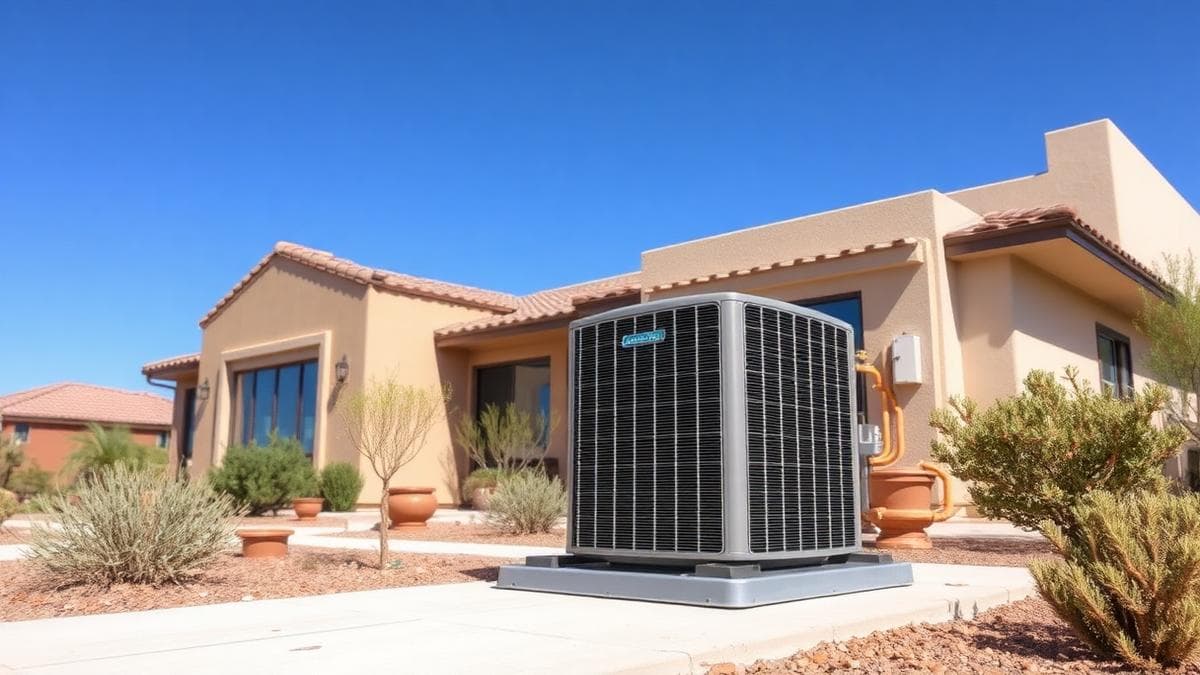
It does not describe Arizona. Here, an air conditioner runs something like seven or eight months a year, frequently against outdoor temperatures above 110, and often through nights that never drop below 90. The equipment is the same; the duty cycle is not.
A realistic expectation for the Phoenix metro is 10 to 15 years, with well-maintained systems reaching the upper end and neglected ones falling short of the lower one. This article covers what actually determines where yours lands and how to judge where it is in that range.
Why Arizona Is Harder on Equipment
It is not simply that it is hot. Several distinct factors compound.
Run hours. A Minneapolis air conditioner might accumulate 600 run hours a season. A Mesa one can accumulate several times that. Compressors, capacitors, contactors, and fan motors wear by cycles and hours, not by calendar years, so a ten-year-old Arizona unit has lived considerably longer than a ten-year-old Ohio one.
High ambient operation. Air conditioners reject heat to outdoor air, and that gets harder the hotter the air is. At 115 degrees a system is working near the edge of its design envelope, with higher head pressure and more stress on the compressor. Our guide on AC performance in 115-degree heat covers what that looks like in practice.
No recovery period. In most of the country a system rests overnight. During a Phoenix July the overnight low can stay in the 90s, so the equipment never gets the break that lets components cool down.
Dust and UV. Fine desert dust coats condenser coils and reduces heat transfer. Relentless sun degrades wire insulation, contactor housings, and fan motor windings on rooftop and west-facing units faster than shaded installations.
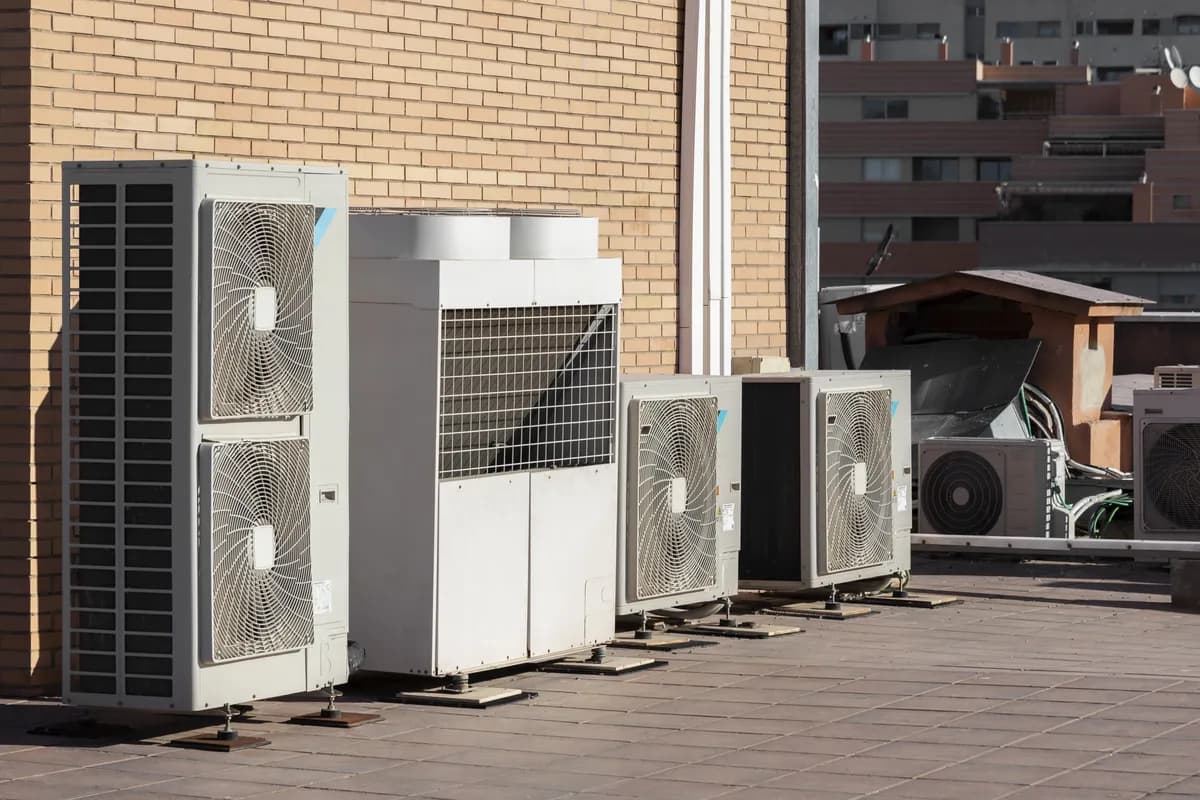
Rooftop placement. Common on older Mesa and Phoenix homes, and the harshest possible environment — more sun, more heat, and more thermal cycling than a ground-level unit.
Realistic Lifespan by Equipment Type
Broad ranges, assuming reasonable maintenance:
- Central air conditioner (split system): 10 to 15 years in Arizona.
- Heat pump: 12 to 15 years, though they run in both seasons and so accumulate more hours.
- Gas furnace: 20 years or more — because it barely runs here. The heat exchanger rarely wears out; the electronics and igniters fail first.
- Packaged rooftop unit: 10 to 15 years, often at the lower end given sun exposure.
- Ductless mini-split: 15 to 20 years, helped by variable-speed operation and less cycling.
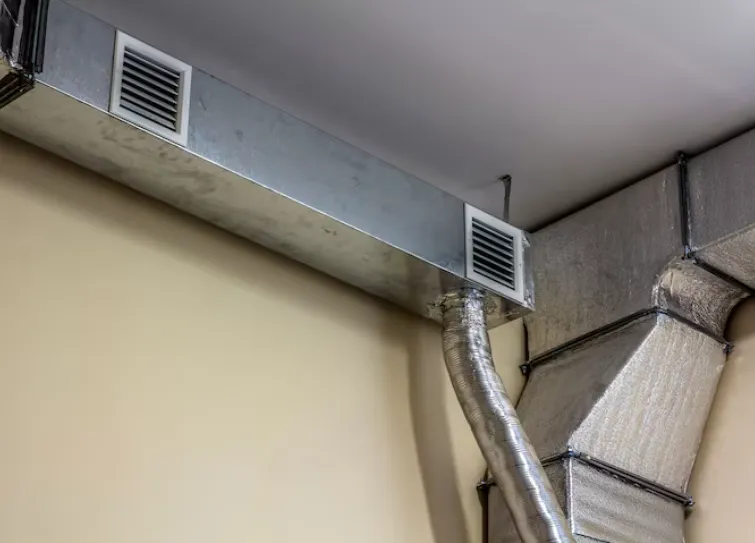
- Ductwork: 20 to 25 years, though flex duct in a 160-degree attic degrades faster than that suggests.
The spread within each range is mostly down to three things: whether the system was correctly sized at installation, whether it was installed well, and whether anyone maintained it. None of those are brand-dependent.
What Actually Shortens Lifespan
In rough order of how often we see them cause early failure:
Skipped maintenance. A dirty condenser coil makes the compressor work harder every single hour it runs. A dirty filter restricts airflow and can freeze the evaporator coil. Neither destroys a system immediately; both shorten it measurably over years. Preventative maintenance is genuinely the highest-leverage thing an Arizona homeowner can do.
Wrong size at installation. An oversized system short cycles — it cools the thermostat's location quickly, shuts off, and restarts. Every start is the hardest moment for a compressor. An undersized system runs continuously and never gets a break. Both shorten life. Correct sizing is determined by a load calculation, not by square footage rules of thumb.
Refrigerant leaks left unaddressed. Running low on charge makes the compressor run hot and poorly lubricated. Topping it up annually without finding the leak is slow destruction of the most expensive component in the system.
Poor airflow. Undersized returns, crushed flex duct, closed registers, and dirty coils all force the equipment to work outside its design conditions.
Deferred small repairs. A failing capacitor makes the compressor work harder to start. A pitted contactor causes voltage drops. Cheap parts, left alone, kill expensive ones.
How to Tell Where Yours Is
Start by finding out how old it actually is. The manufacturer's data plate on the outdoor unit carries a model and serial number, and most manufacturers encode the manufacture date in the serial — often as the first four digits in week-year or year-week format. If the system came with the house and you have no paperwork, that plate is the honest answer.
Then look at the signals that suggest a system is near the end rather than simply needing a repair:
- It is over ten years old and has needed two or more repairs in the last two seasons.
- Cooling capacity has visibly declined — rooms that used to hold 75 now sit at 80 on hot afternoons.
- Electricity bills have climbed year over year with no change in habits.
- It uses R-22 refrigerant. Production has been phased out, so leaks become disproportionately expensive to address.
- The compressor has already been replaced once.
- Runtime is nearly continuous during summer afternoons.
None of those individually means replace it. Together they shift the arithmetic. Our repair versus replace cost guide and the 5,000 rule both walk through making that call with actual numbers rather than instinct.
How to Get to the Top of the Range
The difference between an Arizona air conditioner that dies at nine years and one that reaches sixteen is not luck, and it is mostly not brand either.
Change the filter on a real schedule. Here that often means every one to two months during cooling season rather than the ninety days printed on the packaging — see how often to change your filter in Arizona.
Keep the outdoor coil clean and clear. Rinse dust off the condenser fins periodically, keep two feet of clearance, and do not let oleander or bougainvillea grow into it.
Have it serviced before each cooling season, not during. A technician checking refrigerant charge, electrical connections, capacitor condition, and coil cleanliness in March catches the things that cause July failures.
Fix small faults promptly. A weak capacitor is inexpensive; the compressor it eventually takes out is not.
And if yours is on a roof in full sun, accept that it is working in the hardest conditions available and service it accordingly.
Frequently Asked Questions
Is 10 years old for an AC unit in Arizona? It is middle-aged. Plenty of ten-year-old systems here have years left; plenty are on borrowed time. Condition and maintenance history matter more than the number.
Does running the AC constantly shorten its life? Less than you would think. Steady operation is easier on a compressor than frequent starts. Short cycling is the harder pattern.
Will a higher-efficiency unit last longer? Not inherently, though variable-speed equipment cycles less, which helps. Installation quality and maintenance matter more than the efficiency rating.
Does brand matter for lifespan? Far less than most people expect. Installation quality, correct sizing, and maintenance account for most of the variation between systems that last and systems that do not.
My unit is 18 years old and still works. Should I replace it? Not automatically — but plan for it. An eighteen-year-old Arizona system is on borrowed time, and replacing on your schedule in spring is easier than replacing in a July emergency.
Want to Know Where Yours Stands?
An honest assessment of a system's remaining life takes an inspection — age, refrigerant type, compressor condition, coil condition, and electrical health together, rather than any one of them alone.
Fast Track Heating & Cooling inspects and services systems across Mesa, Chandler, Gilbert, Tempe, Scottsdale, and the East Valley. See our HVAC inspection, AC repair in Mesa, or — if it is genuinely time — our AC replacement options. Book online or call (602) 905-4528.
Related Services
Need HVAC Help in Arizona?
Fast Track Heating & Cooling offers free estimates on all HVAC services across the Valley.
Call (602) 905-4528