AC Running But Not Cooling in 115° Heat: 7 Causes
It's 115° outside, the AC has been running for hours, and the house is sitting at 84°. The system isn't dead — the fan is blowing, the outdoor unit is humming — but the temperature won't come down.
Extreme heat changes the diagnosis. Some of what you're seeing may be physics rather than failure, and some of it is a real fault that gets worse the longer you let the system fight it. This guide separates the two, in the order we actually find them on Valley service calls.
First: know what your AC can actually do at 115°
A residential air conditioner doesn't cool to a set temperature — it removes a fixed amount of heat per hour. On a design-day 115° afternoon, a correctly sized, healthy system in an average Arizona home may only be able to hold roughly 20–25° below the outdoor temperature. That means 90–95° outside is comfortable; 115° outside can mean the house drifts up a few degrees in the late afternoon even with everything working.
The measurement that tells you the truth is the temperature split: put a thermometer in a supply vent and another at the return grille. A healthy system produces roughly a 16–22° drop between them.
Interpret it like this:
- Split of 16–22° but the house won't cool: the equipment is working; the problem is capacity, heat gain, or duct losses.
- Split of 8–15°: something is wrong — airflow or refrigerant. Keep reading.
- Split under 8°, or supply air near room temperature: an active failure. Call for service.
- No cool air at all, blowing warm: see our AC blowing hot air guide.
1. Dirty or restricted air filter
The most common cause, and the cheapest fix. A clogged filter starves the evaporator coil of airflow. Less air across the coil means less heat removed, colder coil temperatures, and eventually ice — at which point cooling stops entirely.
In the Valley during monsoon season, filters load up dramatically faster than the manufacturer's schedule suggests. A filter that looks gray is already restricting.
Check it: pull the filter and hold it up to a light. Replace it if no light shows through. Then give the system 30–60 minutes and re-check the temperature split. Our guide on how often to replace your filter in Arizona has the realistic schedule.
2. Condenser coil packed with dust
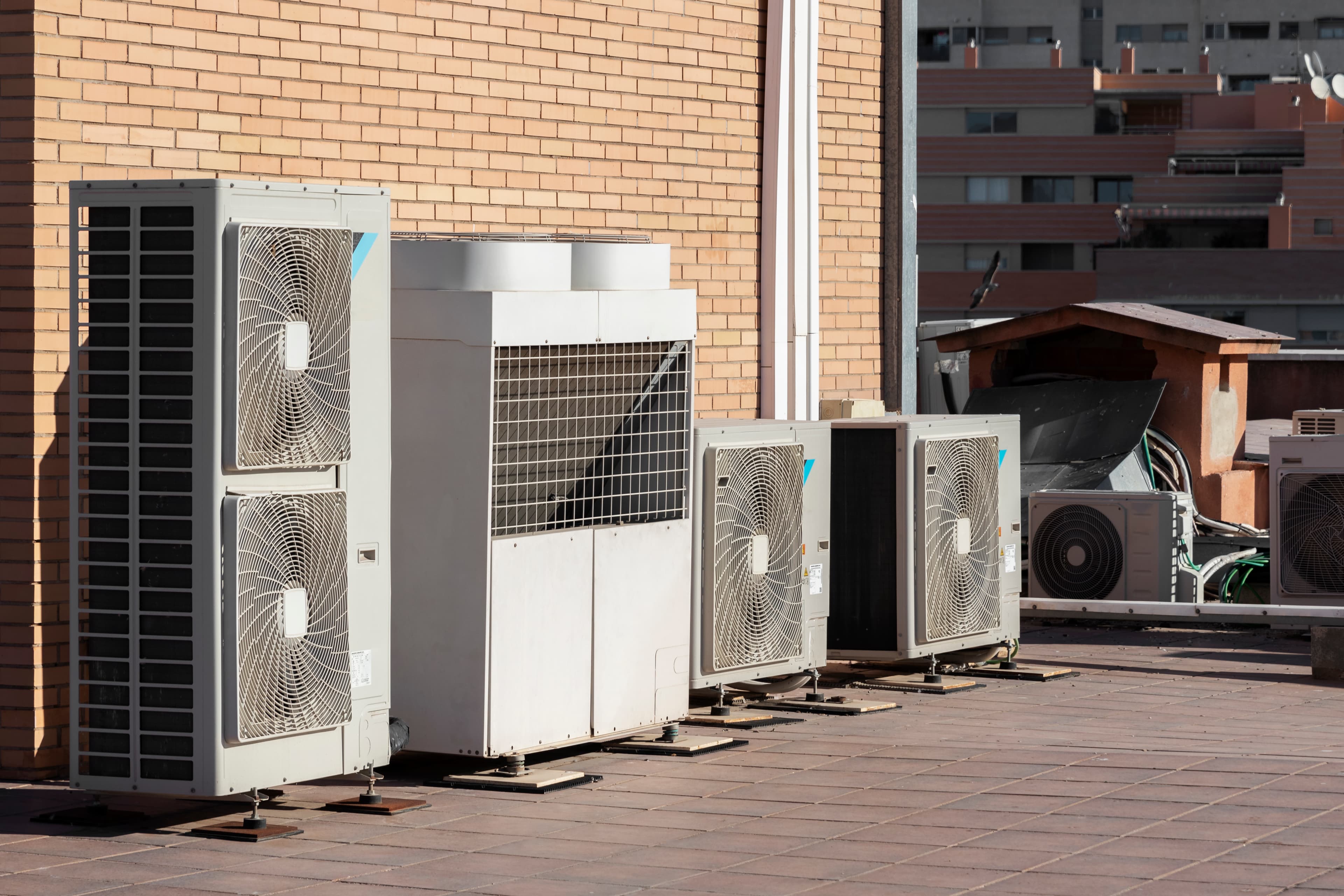
The outdoor unit's job is to dump your home's heat into outdoor air. At 115°, that's already a difficult trade — the air it's rejecting heat into is barely cooler than the refrigerant. Add a coil packed with desert dust, cottonwood, or monsoon debris and the system loses the ability to reject heat at all. Head pressure climbs, efficiency collapses, and the compressor runs hot.
Check it: look at the fins on the outdoor unit. If they're matted gray or you can't see through them, that's your problem. Shut power off at the disconnect and rinse gently from the inside out with a garden hose — never a pressure washer, which flattens the fins permanently. Also clear 2 feet of space around the unit and remove anything shading airflow at the top.
3. Low refrigerant from a leak
Refrigerant isn't consumed — if the charge is low, there's a leak. Symptoms include a weak temperature split, ice on the copper suction line at the outdoor unit, a hissing or bubbling sound, and cooling that gets progressively worse over weeks rather than failing suddenly.
Running a system low on refrigerant in 115° heat is how compressors die. The compressor relies on returning refrigerant for cooling and lubrication.
Check it: this one isn't DIY. Refrigerant handling requires EPA certification, and "just adding a can" without finding the leak wastes money and repeats in weeks. Turn the system to fan-only and call.
4. Failing run capacitor
A capacitor that's weak but not dead produces exactly this symptom set: the unit runs, the fan spins, but the compressor either isn't starting or is struggling — so no real cooling happens. You may hear a hum from the outdoor unit, or hear the compressor try to start and stop.
Arizona heat is brutal on capacitors; interior condenser temperatures well above 150° degrade them every summer. It's the single most common component failure we replace.
Check it: listen at the outdoor unit. Humming with a fan that won't turn, or a fan that needs a nudge to start, points here. Don't open the electrical panel — capacitors hold a dangerous charge even with power off. Pricing is in our capacitor replacement cost guide, and the fan-specific symptoms are covered in AC fan not spinning.
5. Frozen evaporator coil
Counterintuitive in 115° weather, but common: restricted airflow or low refrigerant drops the indoor coil below freezing, condensation freezes on it, and the ice blocks airflow entirely. Now nothing cools, and meltwater can overflow the pan.
Signs: ice visible on the indoor unit or the refrigerant line, weak airflow from vents, water around the air handler.
What to do: turn the thermostat to OFF and the fan to ON. Let it thaw for 2–4 hours — running the compressor against a frozen coil damages it. Replace the filter while it thaws. If it refreezes after restarting, the underlying cause is still there. Full detail in why is my AC freezing up.
6. Duct leakage and attic heat gain
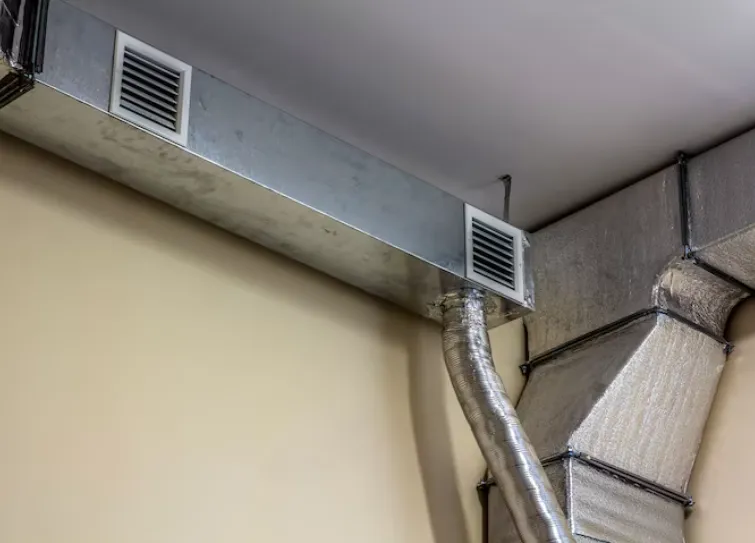
This is the cause most homeowners never suspect, and it's especially punishing in Arizona. Your ducts run through an attic that hits 150–170° in July. Air leaving the air handler at 55° can arrive at a far bedroom vent at 68° after traveling through leaky, poorly insulated ductwork.
The equipment tests perfectly. The house still won't cool — particularly the rooms farthest from the air handler.
Signs: one or two rooms dramatically hotter than the rest, a good temperature split at the supply closest to the unit but weak air at distant vents, dust streaks around register edges.
What to do: this needs a duct evaluation — sealing and adding insulation to attic runs is often a far better investment than upsizing equipment. Our air duct cleaning and duct services page covers what an inspection involves.
7. Thermostat, breaker, or control fault
Less common but fast to rule out:
- Fan set to ON instead of AUTO — this circulates air continuously, including between cooling cycles, so vents blow room-temperature air and the house feels warmer.
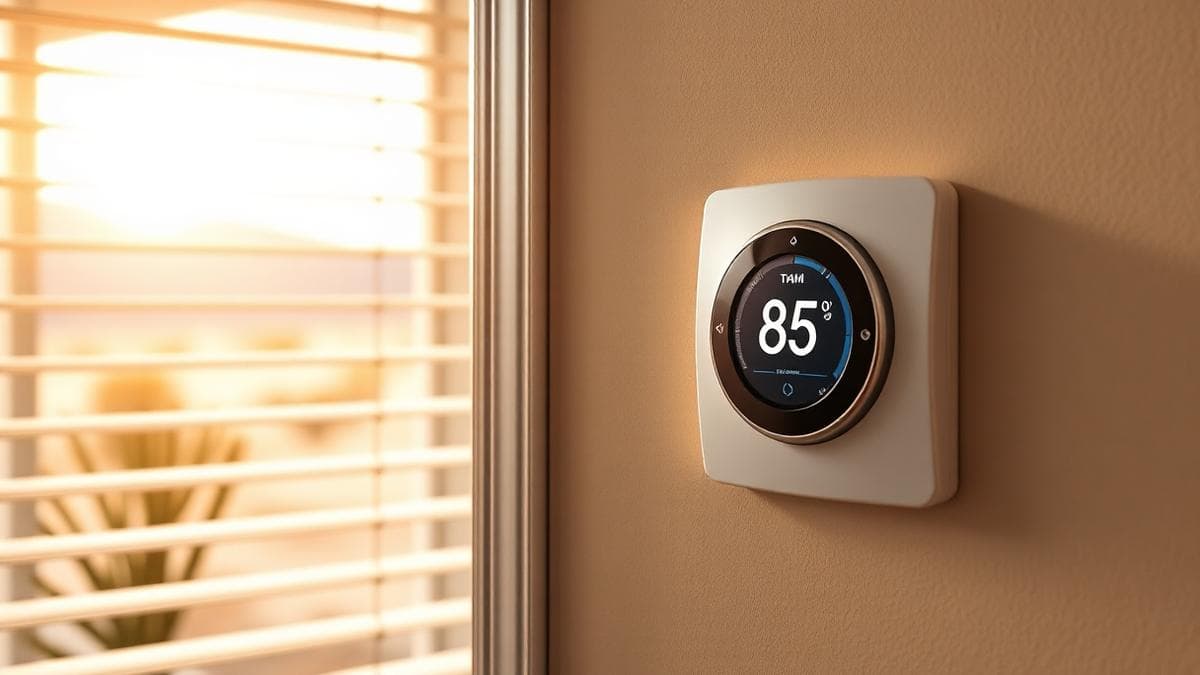
- Thermostat placed in direct sun or near a heat source — it satisfies early and shuts the system down.
- Dead thermostat batteries — flaky behavior before total failure.
- Outdoor unit breaker tripped while the indoor blower still runs — you get airflow with zero cooling. This is a classic "AC running but not cooling" scenario. See why your AC breaker keeps tripping.
- Failed contactor — the outdoor unit never engages even though the thermostat is calling.
When to shut the system off
Continuing to run a struggling AC in extreme heat can turn a moderate repair into a compressor replacement. Shut it off at the thermostat and call if you see any of these:
- Ice anywhere on the indoor coil or refrigerant lines
- A burning, hot-plastic, or electrical smell
- Loud grinding, screeching, or repeated clicking from the outdoor unit
- The outdoor unit humming without the fan turning
- The breaker tripping repeatedly
- Water pooling around the indoor air handler
Staying safe while you wait
In 115° heat, indoor temperatures climb quickly once cooling stops — this is a health issue, not just a comfort one. Close blinds on sun-facing windows, run ceiling fans (they cool people, not rooms, so turn them off in empty rooms), avoid the oven, hydrate, and stay on the lowest floor. Check on elderly neighbors. If indoor temperatures become unsafe, relocate to a cooled space and let us come to an empty house.
Our East Valley HVAC emergency guide covers what to do while you wait for a technician.
Frequently asked questions
Why is my AC running but not cooling? The most common causes are a dirty filter, a dust-packed condenser coil, low refrigerant from a leak, a weak capacitor, a frozen evaporator coil, duct losses in a hot attic, or a tripped outdoor breaker.
How cold should my AC blow when it's 115° outside? Supply air should be roughly 16–22° cooler than return air. A smaller split means airflow or refrigerant trouble.
Is it normal for an AC to run constantly in Arizona summer? On extreme afternoons, near-continuous operation is normal for a correctly sized system. Running constantly while the indoor temperature climbs is not.
Should I turn my AC off if it's not cooling? Yes, if you see ice, smell burning, hear grinding, or the breaker keeps tripping. Otherwise, switch to fan-only and call.
Can I add refrigerant myself? No. It requires EPA certification, and low charge always means a leak that needs to be found and repaired.
Why is one room hot when the rest of the house is fine? Usually duct leakage, insufficient duct insulation in the attic, or a closed/blocked register — not an equipment failure.
Get it fixed today
Fast Track Heating & Cooling handles no-cool emergencies across Mesa, Chandler, Gilbert, Tempe, Scottsdale, and the East Valley, with same-day diagnosis whenever we can get to you. See our AC repair service, AC repair in Mesa, or emergency AC repair in Mesa. Book online or call (602) 905-4528.
Related Services
Need HVAC Help in Arizona?
Fast Track Heating & Cooling offers free estimates on all HVAC services across the Valley.
Call (602) 905-4528