Why Is My AC Freezing Up? Causes and Fixes for Arizona Homes
It's counterintuitive, but a frozen air conditioner in the middle of an Arizona summer is one of the most common problems we see. You walk over to the indoor unit or peek at the copper lines and find ice — sometimes a solid block of it. Meanwhile, the vents are blowing warm air and the house is climbing past 85°.
The ice is a symptom, not the actual problem. Here's what's really going on, what to do right now, and how to keep it from happening again.
What to do the moment you notice ice
Before anything else:
- Turn the cooling OFF at the thermostat, but leave the FAN set to ON. This melts the ice safely and prevents further damage.
- Wait at least 1–3 hours — sometimes longer for a fully frozen system — until every visible piece of ice is gone.
- Do not chip, scrape, or blow-dry the ice. The evaporator coil fins bend easily and refrigerant lines can be punctured.
- Once fully thawed, check the drain pan for overflow and towel up any water before turning cooling back on.
Continuing to run a frozen AC is one of the fastest ways to destroy a compressor — an easy $2,500–$5,000 mistake.
Cause #1: Restricted airflow
This is behind roughly 70% of the frozen-AC calls we run. The evaporator coil is designed to be at ~40°F while warm air flows across it. When airflow drops, that coil gets colder and colder until moisture in the air freezes onto it — and then the ice itself further blocks airflow. It's a runaway loop.
Common airflow killers:
- A dirty air filter. In Arizona's dust, filters clog faster than manufacturers assume. See how often to change your AC filter here.
- Closed or blocked vents. Furniture over supply registers, kids' toys shoved into returns, closed doors with no return in the room.
- Dirty evaporator coils from years without a tune-up.
- Failing blower motor running at reduced speed.
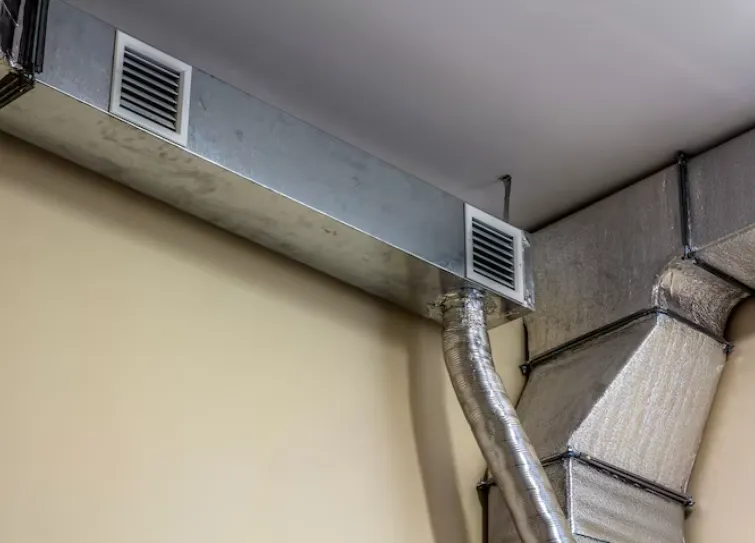
- Collapsed or disconnected duct in the attic — brutal in Arizona because your ducts run through 140° attic space.
Cause #2: Low refrigerant
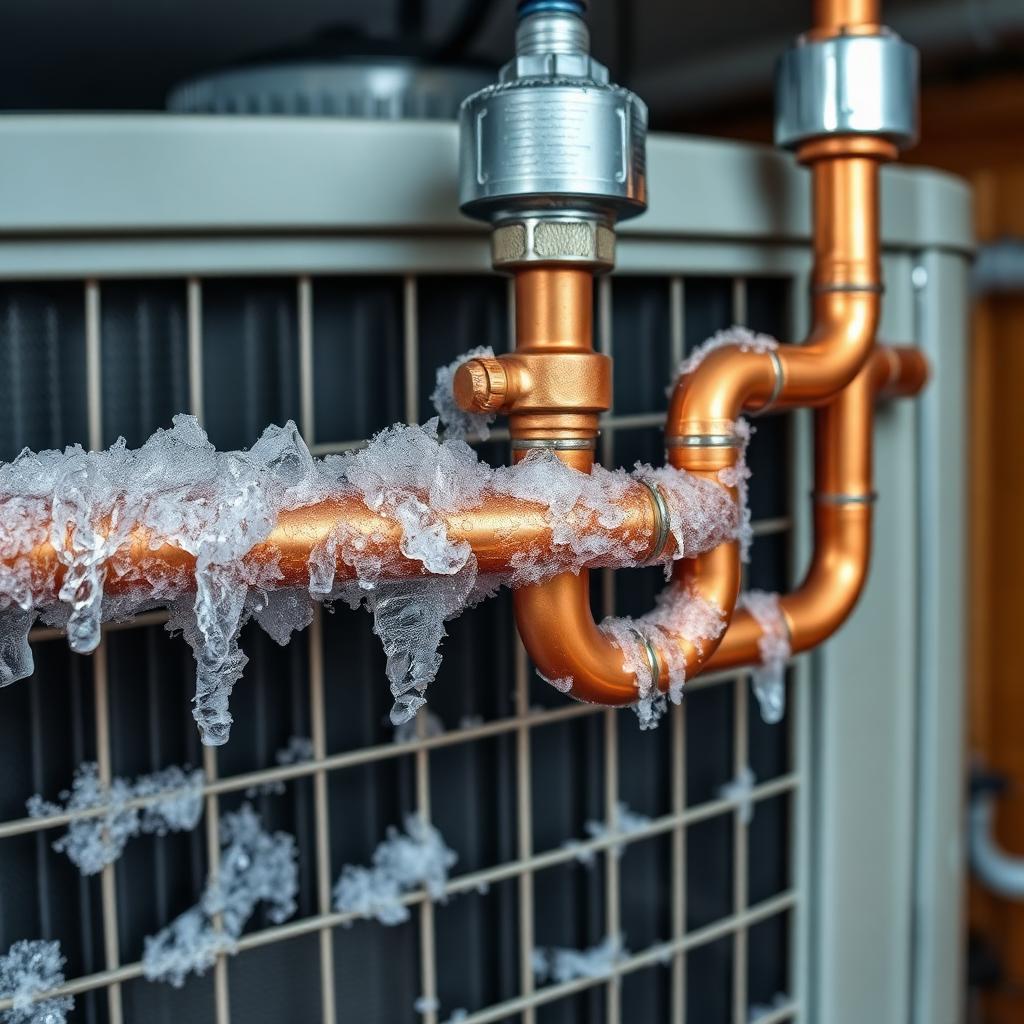
The second most common cause is a refrigerant leak. Low refrigerant lowers the pressure in the evaporator coil, which lowers the coil's temperature well below freezing. Ice builds — often starting on the outdoor copper suction line before spreading to the indoor coil.
Signs it's refrigerant, not airflow:
- Ice appears on the copper line going outside to the condenser
- Hissing or bubbling sounds near the indoor unit
- System ran fine last summer and has been slowly getting weaker
- You've already replaced the filter and it froze up again
This isn't a DIY fix. Refrigerant is regulated, the leak has to be found and sealed, and the system has to be recharged to exact spec. More detail in our refrigerant recharge signs guide.
Cause #3: Cold overnight temperatures
Less common in Arizona summer, but worth mentioning: running the AC when it's below about 60° outside can cause freezing. This mostly shows up in the shoulder seasons (November, early March) if someone leaves cooling on overnight after a cool front. If you notice ice on a chilly morning, that's likely the cause — switch to heat or off overnight until it warms up.
Related issues
A frozen AC often comes with a puddle. When the ice melts, it can overflow the drain pan — especially if the drain line is clogged, which is extremely common in Arizona. If you're seeing water damage under an indoor unit, check our guides on AC leaking water and clogged AC drain lines.
How to prevent it from happening again
Prevention is genuinely easy on this one:
- Change your filter every 30–60 days. Set a phone reminder — this alone prevents most freeze-ups.
- Keep vents and returns clear. Nothing on top of returns, nothing blocking supply registers.
- Get a yearly tune-up. A tech checks refrigerant charge, cleans coils, and measures airflow — the three things that matter for this exact failure.
- Watch for weak cooling. If the house is slowly getting harder to cool, don't ignore it — that's often a leaking refrigerant charge in early stages.
When to call a pro
If your AC has thawed, you've changed the filter, cleared vents, and it freezes up again — stop running it and call. That's almost always a refrigerant or coil issue. Fast Track Heating & Cooling diagnoses and fixes freeze-ups across the East Valley. See our AC repair service page or call (602) 905-4528 for a free diagnostic.
Related Services
Need HVAC Help in Arizona?
Fast Track Heating & Cooling offers free estimates on all HVAC services across the Valley.
Call (602) 905-4528