Furnace Making a Loud Noise? What Each Sound Actually Means
Furnaces are not silent. A certain amount of whoosh, click, and low rumble is just the sound of combustion and moving air, and a system in a hallway closet will always be more audible than one out in a garage.
But a new noise is information. Different failures make distinctly different sounds, and the sound itself usually tells a technician which component to look at before they have opened anything. Learning to describe yours accurately is genuinely useful.
Here is what each one typically means, and which ones should make you shut the system off.
Banging or Booming When the Heat Starts
A single loud bang or boom a few seconds after the furnace starts is called delayed ignition, and it is the noise on this list that most deserves immediate attention.
What happens is that the gas valve opens but the burners do not light straight away. Gas accumulates in the burner compartment for a few seconds, and then it all ignites at once. The bang is a small contained explosion. It is not supposed to happen, and over time it can crack the heat exchanger — which turns a repair into a replacement and introduces a carbon monoxide risk.
Causes include dirty burners, a weak or failing igniter, misaligned burners, or gas pressure that is out of specification. In Arizona the usual culprit is simply dirt: burner ports partially blocked after a long idle season, so the flame takes too long to carry across them.
If your furnace bangs on startup, stop using it and have it looked at. This is not a wait-until-spring item.
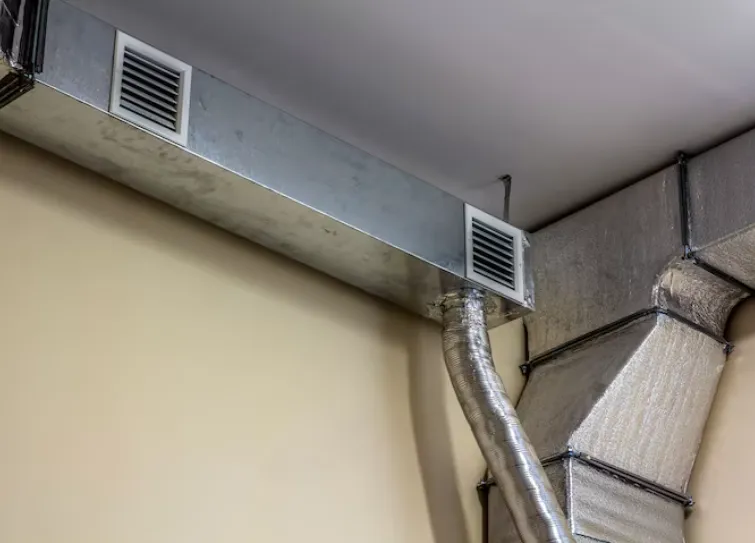
A separate, harmless version of banging is sheet metal ductwork popping as it expands and contracts with temperature changes. That sound comes from the ducts rather than the furnace, happens as the system starts and stops, and is a comfort annoyance rather than a fault.
Squealing or Screeching
A high-pitched squeal almost always comes from a motor or something a motor drives.
On belt-drive furnaces — older equipment, but still out there in Mesa and Tempe — it is usually a worn, loose, or misaligned blower belt. On the direct-drive units that make up most modern systems, it is typically failing motor bearings in the blower or the draft inducer.
A squeal that appears at startup and then settles down often points at bearings. A continuous one that tracks with blower speed points at the belt or the wheel.
This is not an emergency, but it is a warning. Bearings that are squealing are on their way to seizing, and a seized blower motor on the coldest night of the year is both more expensive and worse timed than replacing it when you first heard the noise.
Rattling or Vibrating
Rattling is the most common furnace noise and usually the least serious — but it is worth tracking down because it occasionally signals something real.
Harmless causes make up most of it:
- Loose access panels or screws — the blower door is the usual offender, and it vibrates against the cabinet once a screw backs out.
- Ductwork that has worked loose at a joint or is resting against a framing member.
- Something sitting on or against the furnace cabinet.
- A filter that is the wrong size and rattling in its slot as air moves past it.
Less harmless causes include a blower wheel that has come loose on its shaft, a cracked blower wheel blade, or debris inside the blower housing. Those produce a rattle that is clearly coming from inside the cabinet and that changes with blower speed.
Tighten the panel screws first. If the rattle persists and seems to come from inside, have it looked at before a loose wheel damages the housing.
Scraping or Metal-on-Metal
A harsh scraping sound — metal dragging on metal — means shut the system off now.
It usually means the blower wheel has shifted and is contacting the housing, or that a motor mount has failed and the whole assembly has dropped slightly out of position. Running it in that state destroys the wheel, the housing, or both, and turns a moderate repair into a large one quickly.
Turn the furnace off at the service switch and leave it off. This is one of the few genuinely do-not-run-it noises.
Clicking
Clicking is normal in small doses. Relays on the control board click as they engage, and the gas valve clicks as it opens. A few clicks at the start of a cycle are just the system sequencing.
Repeated clicking with no ignition is different. That is usually the control board attempting to light the furnace over and over and failing — a bad igniter, a dirty flame sensor, or no gas reaching the burners. Most boards try three times and then lock out for an hour, so the pattern is often several clicks, silence, then the whole thing again later.
If you are hearing that, our guide to a furnace that will not turn on walks the ignition sequence step by step, and furnace short cycling covers the repeated-attempt pattern.
Clicking from the thermostat rather than the furnace, with nothing happening afterwards, often just means dead batteries.
Humming or Buzzing
A low hum while the system runs is normal — transformers hum, and motors hum.
A loud buzz, especially one that happens when the furnace tries to start and nothing else follows, is more likely a failing capacitor or a motor that is drawing current but not turning. A seized motor will buzz under load and then trip on thermal overload.
Buzzing accompanied by any burning or hot-plastic smell is an electrical problem. Shut it off and read our guide on furnace burning smells for how to tell electrical from harmless dust.
Whistling
Whistling is almost always airflow squeezing through a gap it should not be, or being pulled through an opening that is too small.
The most common cause by far is a restricted filter — air forcing its way around or through a clogged filter whistles audibly. The second most common is closed supply registers, which raises static pressure and makes the remaining openings work harder.
Beyond that, look for undersized return ducts, a filter slot with a gap around it, or a disconnected duct drawing attic air. If whistling is accompanied by rooms that never get warm, you may be losing conditioned air into the attic, which is worth a ductwork inspection.
Which Noises Mean Shut It Off
Most furnace noises can wait until business hours. These cannot:
- Banging or booming on startup — delayed ignition, which can crack the heat exchanger.
- Scraping metal on metal — something is physically contacting something else and destroying it.
- Loud buzzing with a burning smell — electrical fault.
- Any noise alongside a gas smell — leave the house and call the utility or 911 from outside.
- Any noise alongside a sounding CO alarm — leave and call 911.
Frequently Asked Questions
Why is my furnace suddenly louder this year? The most common answer in Arizona is that it has been sitting for eight months. Dust on the blower wheel unbalances it, bearings dry out, and panels loosen. A noise that appears on the first run of the season is often resolved by cleaning and tightening.
Is it normal for ducts to pop? Yes. Sheet metal expands when warm air hits it and contracts as it cools. It is a comfort annoyance, not a fault, though better duct support can reduce it.
Can I just turn the volume down by closing vents? No — that makes things worse. Closing registers raises static pressure, which usually increases noise and can trip a high-limit switch.
My furnace is in the attic and everything sounds loud. Is that normal? Attic installations do transmit more noise into the ceiling below, and Arizona homes have a lot of them. A genuinely new noise is still worth identifying.
How much does it cost to fix a noisy furnace? It depends entirely on which noise. A loose panel screw costs nothing; a blower motor is a real repair. Identifying the sound accurately is what makes the estimate meaningful.
Get the Noise Identified
If you are hearing banging on startup, scraping, or buzzing with a burning smell, turn the system off and have it looked at before running it again. For everything else, a noise that is new is worth diagnosing before it becomes a failure on a cold night.
Fast Track Heating & Cooling handles heating repairs across Mesa, Chandler, Gilbert, Tempe, Scottsdale, and the East Valley. See our furnace repair service, furnace repair in Gilbert, or our furnace maintenance inspection. Book online or call (602) 905-4528.
Related Services
Need HVAC Help in Arizona?
Fast Track Heating & Cooling offers free estimates on all HVAC services across the Valley.
Call (602) 905-4528