The Best AC Unit for Arizona: What Actually Matters Here
Most air conditioner buying advice is written for a climate that is not this one. It assumes a system that runs four months a year against 85-degree afternoons, and it optimises for things that barely matter when the design condition is 110 degrees and the season runs from March to October.
This is what we would tell a neighbour in Mesa who asked what to buy. No brand endorsements — we will explain below why brand is a smaller factor than people assume — and no prices, because equipment cost varies enormously with home specifics and anyone quoting you a figure sight unseen is guessing.
What follows is the set of decisions that actually determine whether you are happy with the system in five years.
Decision One: Heat Pump or Air Conditioner Plus Furnace
This is the biggest fork, and in Arizona the answer leans one way more than it does nationally.
A heat pump is an air conditioner that can also run backwards to heat. Because our heating season is short and mild, the conditions where heat pumps struggle — sustained sub-freezing temperatures — barely exist here. You get one piece of equipment doing both jobs, no gas line, no combustion, no flue, no carbon monoxide risk, and very efficient heating in the handful of months you need it.
A separate air conditioner paired with a gas furnace makes sense if you already have gas service and a furnace with life left in it, or if you are in a higher-elevation area with genuinely cold nights. Gas heat also delivers hotter air, which some people simply prefer — heat pump air feels mild by comparison, and that bothers some households.
For a typical Phoenix-metro home replacing both at once, a heat pump is usually the straightforward choice. Heat pump versus air conditioner goes through the comparison in more depth.
Decision Two: Single-Stage, Two-Stage, or Variable Speed
This affects daily comfort more than any efficiency number on the label.
Single-stage equipment is either fully on or fully off. It is the least expensive to buy and perfectly serviceable. In a climate with a long cooling season it spends most of the summer running flat out, which is actually a reasonable match — the load genuinely is high most of the time.
Two-stage runs at roughly 65 percent capacity most of the time and steps up to full output when it cannot keep up. Longer, gentler cycles mean steadier temperatures and better humidity control during monsoon season.
Variable speed modulates continuously across a wide range. It runs almost constantly at low output, which produces very even temperatures, quiet operation, and the best humidity control of the three.
In Arizona the case for variable speed is strongest in homes with comfort problems — multi-storey layouts, large west-facing glass, rooms that never match the thermostat. It is less compelling in a single-storey home that is already comfortable. The humidity benefit matters for perhaps eight weeks a year during monsoon rather than year-round, which is a real but seasonal advantage.
Decision Three: Efficiency Rating, and Where It Stops Paying
Efficiency is now rated as SEER2 and EER2, which replaced the older SEER and EER measures and are tested under conditions closer to real operation. The federal minimum in the Southwest region is higher than in the rest of the country, specifically because our cooling loads are so large.
Here is the nuance that matters locally: EER2 is arguably more relevant to Arizona than SEER2. SEER2 is a seasonal average across a range of conditions. EER2 measures efficiency at a single high outdoor temperature. Since a large share of our run hours happen on genuinely hot afternoons, a system that holds its efficiency at high ambient temperatures will outperform its seasonal rating here.
Because our run hours are so high, upgrading efficiency does pay back faster in Arizona than almost anywhere else. But the return is not linear — the jump from minimum efficiency to moderately high efficiency captures most of the savings, and each step above that costs more while returning less. The top of the range tends to make sense for people staying in the home long-term, with high usage, and often when a utility rebate narrows the gap.
Decision Four: Size — and Why Bigger Is Worse
If you take one thing from this article, take this one: an oversized air conditioner is a worse air conditioner.
The intuition is that more capacity means better cooling on the hottest days. What actually happens is that an oversized system satisfies the thermostat quickly, shuts off, and restarts a short time later. That produces uneven temperatures, poor humidity removal during monsoon, more wear from frequent starts, and often a house that feels clammy and cold in some rooms while others stay hot.
Correct sizing comes from a load calculation — a room-by-room assessment of insulation, window area and orientation, ceiling height, duct condition, shading, and air leakage. Not from square footage, and not from matching whatever was there before, which may itself have been wrong.
Be cautious of any contractor who sizes your system by quoting a tons-per-square-foot rule. What size AC unit you actually need covers how the calculation works.
Why Installation Quality Beats Brand
Homeowners spend a lot of energy choosing between brands, and comparatively little on choosing who installs the equipment. That is backwards.
The major manufacturers all build equipment to similar standards, often sharing components across brands. The differences in reliability between mainstream brands are much smaller than the differences between a careful installation and a rushed one.
Things an installer controls that will affect your system more than the badge on it:
- Correct refrigerant charge. Undercharged or overcharged systems lose capacity and efficiency immediately and wear faster. This has to be measured, not estimated.
- Proper airflow setup. Blower speed has to be configured for your actual duct system, not left on a factory default.
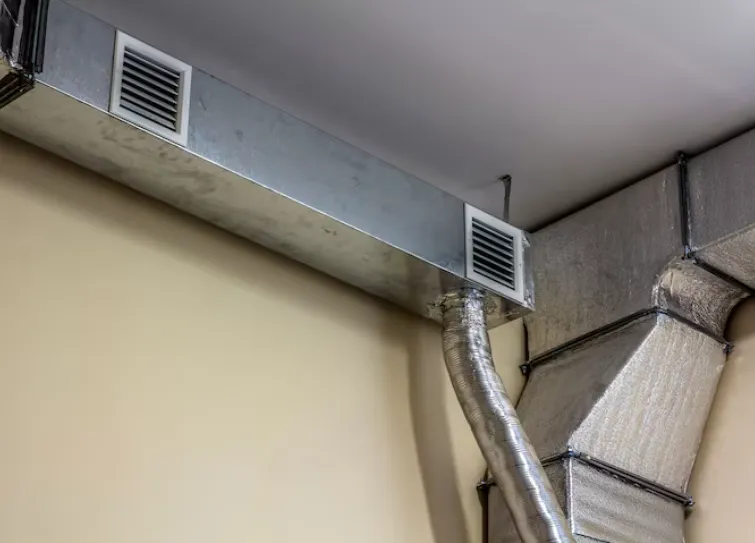
- Duct condition and sizing. New equipment on undersized or leaking ducts will underperform permanently. In Arizona those ducts are usually in a 160-degree attic, so leaks are expensive. A ductwork inspection before replacement is worth doing.
- A real load calculation rather than a rule of thumb.
- Proper evacuation of the line set before charging, which removes moisture and non-condensables that would otherwise degrade the system from day one.
- Correct electrical — right breaker, right wire size, tight connections.
A mid-range system installed properly will outlast and outperform a premium system installed carelessly. It is not a close contest.
Arizona-Specific Features Worth Paying For
A short list of things that genuinely matter here and are easy to overlook:
- Verified high-ambient performance. Confirm the equipment is rated to operate at the temperatures we actually reach, not just tested at 95 degrees.
- A corrosion-resistant outdoor coil. Less about salt air here and more about longevity under relentless UV and dust.
- A hard start kit on single-stage compressors, which reduces electrical stress at startup — the moment of highest strain.
- A quality filter setup with adequate surface area. Desert dust is relentless, and a filter rack that forces frequent changes of a restrictive filter creates problems. Filter choice matters more here than in cleaner climates.
- Shade, if you can arrange it — without restricting airflow. A condenser out of direct afternoon sun runs measurably cooler.
- A thermostat matched to the equipment. Variable-speed and two-stage systems need a compatible thermostat to use their capability at all.
What Not to Prioritise
A few things that get oversold:
Brand loyalty, for the reasons above. Smart-thermostat integration, which is a good feature but can be added independently of the equipment. Extremely high efficiency ratings in a home you plan to sell within a few years, since the payback period will outlast your ownership. And extended warranties sold aggressively at the point of purchase, which deserve the same scrutiny as any other insurance product — read what is actually covered and for how long, and check whether labour is included.
Also be sceptical of anyone pushing a replacement when a repair would do. A functioning system with one failed component is usually worth fixing — our guides on repair versus replace and AC lifespan in Arizona cover how to judge that.
Questions About Choosing an AC Unit for Arizona
What SEER2 rating should I get in Arizona? Above the regional minimum is sensible given our run hours, but the sweet spot is usually moderate rather than maximum. Ask for a payback estimate based on your actual usage rather than a generic one, and look at EER2 alongside SEER2.
Is a heat pump really a good idea in Arizona? Yes. Our heating season is short and mild, which is exactly where heat pumps are most efficient, and you get one system instead of two.
How many tons do I need? That requires a load calculation. Anyone who answers from square footage alone is guessing, and guessing high is the common error.
Which brand is most reliable? Installation quality and maintenance account for far more of the variation than brand does. Choose the contractor first.
When is the best time to replace? Spring or autumn. You get better scheduling, more time to compare options, and you are not making a large decision while the house is 95 degrees inside.
Thinking About Replacement?
The right system for your house depends on your ductwork, your insulation, your window orientation, and how long you plan to stay — which is why a load calculation and a look at your actual home beats any generic recommendation.
Fast Track Heating & Cooling handles system replacement across Mesa, Chandler, Gilbert, Tempe, Scottsdale, and the East Valley. See our AC installation service, AC installation in Mesa, or HVAC system installation. Book a consultation online or call (602) 905-4528.
Related Services
Need HVAC Help in Arizona?
Fast Track Heating & Cooling offers free estimates on all HVAC services across the Valley.
Call (602) 905-4528